
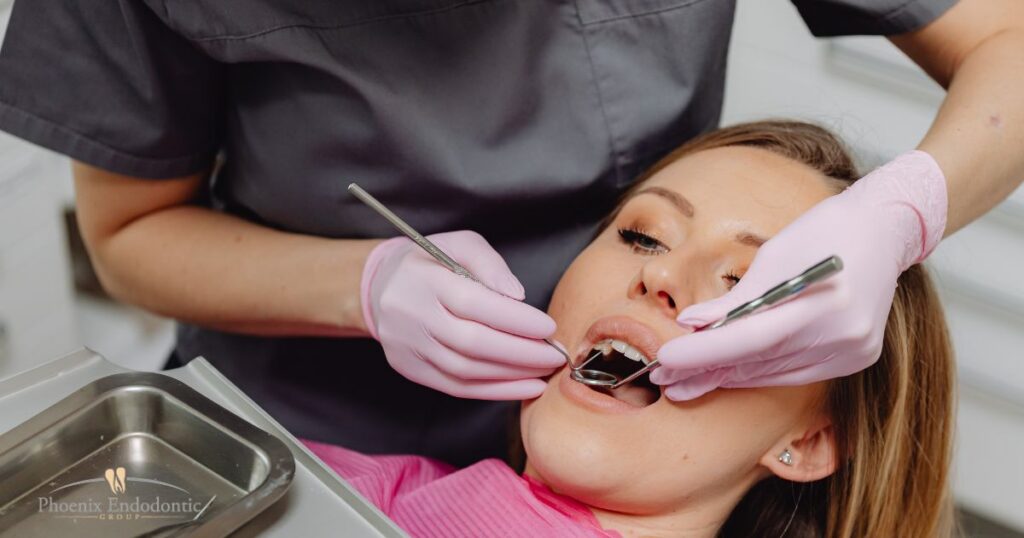
Your natural teeth are designed to last a lifetime. While modern dentistry, including endodontic treatment, can save teeth that have been damaged or infected, the best outcome is always keeping your teeth healthy in the first place. The good news? Great oral health does not require complicated routines or expensive products. It comes down to a handful of consistent, everyday habits.
As endodontists, our team at Phoenix Endodontic Group sees firsthand what happens when small problems go unnoticed. Here are five simple steps you can take to protect your smile, prevent painful problems, and keep your natural teeth for years to come.
Step 1: Brush Correctly, Twice a Day
Brushing is the foundation of good oral health, but how you brush matters just as much as how often. The American Dental Association recommends brushing twice a day for two minutes each time using a fluoride toothpaste.
Tips for a more effective brushing routine:
- Use a soft-bristled brush. Hard bristles can wear down enamel and irritate your gums over time.
- Angle the brush toward the gumline. Hold your brush at about a 45-degree angle and use gentle, short strokes.
- Don’t forget every surface. Clean the outer, inner, and chewing surfaces of every tooth, plus your tongue.
- Replace your toothbrush regularly. Swap it out every three to four months, or sooner if the bristles are frayed.
- Brush gently. Scrubbing harder does not clean better and can contribute to gum recession and tooth sensitivity.
Step 2: Clean Between Your Teeth Every Day
Even the most thorough brushing cannot reach the tight spaces between your teeth and just below the gumline. These areas are where plaque and food particles tend to collect, and where cavities and gum disease often begin.
Cleaning between your teeth once a day helps remove that buildup before it hardens into tartar. Traditional floss works well, but it is not the only option. Interdental brushes, floss picks, and water flossers are all effective tools. The best choice is the one you will actually use consistently.
If your gums bleed a little when you first start flossing, don’t stop. Mild bleeding is often a sign of gum inflammation that improves with regular cleaning. If bleeding continues after a week or two, mention it to your dentist.
Step 3: Make Tooth-Friendly Food and Drink Choices
What you eat and drink plays a major role in the health of your teeth. Every time you consume sugar, the bacteria in your mouth produce acids that attack your enamel. Acidic foods and drinks can also soften and wear away enamel directly.
Smart habits for a healthier smile:
- Limit frequent snacking on sweets. How often you eat sugar matters more than how much. Constant sipping or snacking keeps your teeth under acid attack.
- Watch acidic drinks. Soda, energy drinks, sports drinks, and citrus juices can erode enamel over time.
- Drink plenty of water. Water helps rinse away food particles and supports healthy saliva flow, which is your mouth’s natural defense. In the Arizona heat, staying hydrated matters even more.
- Choose nutrient-rich foods. Dairy products, leafy greens, lean proteins, and crisp fruits and vegetables help support strong teeth and healthy gums.
Step 4: Protect Your Teeth From Damage
Not every dental problem starts with decay. Cracks, chips, and injuries are common reasons patients visit our office, and many of them can be prevented. A cracked tooth can allow bacteria to reach the inner pulp, leading to pain, infection, and the need for a root canal.
Simple ways to protect your teeth:
- Wear a mouthguard for sports. Contact sports and activities like biking or skateboarding put teeth at risk of injury.
- Ask about a night guard if you grind or clench. Teeth grinding places enormous pressure on your teeth and can lead to cracks over time.
- Avoid chewing ice, hard candy, and pens. These habits are a common cause of chipped and cracked teeth.
- Never use your teeth as tools. Opening packages, tearing tape, or cracking nuts with your teeth can cause sudden damage.
- Avoid tobacco products. Smoking and chewing tobacco increase the risk of gum disease, slow healing, and contribute to oral cancer.
Learn more about the signs and treatment of cracked teeth.
Step 5: Keep Up With Checkups and Listen to Your Teeth
Regular dental exams and professional cleanings allow your dentist to catch problems early, often before you notice any symptoms. Most people benefit from a visit every six months, though your dentist may recommend a different schedule based on your needs.
Between visits, pay attention to what your teeth are telling you. Many tooth problems that require endodontic care start with subtle warning signs. Contact your dentist or endodontist if you notice:
- Lingering sensitivity to hot or cold that lasts after the food or drink is gone
- Pain when chewing or biting down
- Swelling or tenderness in the gums near a tooth
- A small bump or pimple on the gums
- Darkening or discoloration of a single tooth
These symptoms can point to an infection or inflammation inside the tooth. Tooth problems rarely resolve on their own, and waiting often allows an infection to spread. Read more about what happens if you ignore a tooth infection.
The earlier a problem is addressed, the better the chance of saving your natural tooth. Modern root canal therapy is comfortable, efficient, and highly successful, and it allows you to keep your own tooth rather than replacing it.
Your Partner in Saving Natural Teeth
Great oral health is built one day at a time. By brushing well, cleaning between your teeth, making smart food choices, protecting your teeth from injury, and staying alert to warning signs, you give your smile the best possible chance to last a lifetime.
If you are experiencing tooth pain, sensitivity, or swelling, the team at Phoenix Endodontic Group is here to help. Dr. Allen and Dr. Wolcott provide advanced endodontic care with a focus on comfort and saving natural teeth. Call us at (602) 242-4745 or contact us online. Same-day emergency appointments are available.