by Dr. Jacqueline S. Allen | Mar 3, 2014 | Blog, Dentistry, Endodontics
Dental emergencies are no laughing matter. They can be painful and unpleasant to deal with, especially when you are talking about broken or chipped teeth. Why should you worry about a cracked tooth and what should you do if you experience one?
 Fractured teeth aren’t just a cosmetic issue, though they can certainly make you self conscious if the chip is in a spot that shows when you talk or smile. Depending on the type of break, you may suffer damage to your tongue or interior cheek due to sharp edges, sensitivity to hot or cold foods, pain when biting or chewing, loss of the tooth, and infection if the crack is left unattended.
Dr. Jacqueline S. Allen of Phoenix Endodontic Group treats many dental emergencies at her practice. “Younger people (those under 25) are more subject to dental trauma from sports or activities,” says Dr. Allen, going on to state that “any age can have dental trauma from car accidents, falling, etc. In general the elderly are more likely to have biting incidents that damage teeth.” You may also experience superficial cracks in your tooth enamel as you age, which are generally just cosmetic in nature but may still be bothersome.
You may not be able to prevent all tooth breaks from occurring, but you can lessen your chances for chipped or fractured teeth by using protective mouth guards during sporting events and being vigilant about your twice-yearly dentist appointment. Your endodontic specialist can monitor your dental health and fix minor cracks before they become a big problem.
Regardless of the cause, if you do suffer a chip or break, get to a dental or endodontic specialist right away. Bring along any pieces that may have broken off from the tooth. Some breaks may be repaired with a crown, others may require a root canal, and some may need to be extracted completely.
By seeking treatment following dental emergencies, the more likely it is that Phoenix Endodontic Group can save the tooth or use less extensive measures in its repair.

by Dr. Jacqueline S. Allen | Feb 24, 2014 | Blog, Dentistry, Endodontics
Patients come to Phoenix Endodontic Group for many reasons, one of which is tooth pain. Tooth pain can be dull and throbbing or sharp and severe, either of which having various causes. The good news is that some of these triggers are controllable and the effects can be very treatable.
Do you experience pain after eating or drinking something hot or cold? This type of sensitivity is fairly common and can be caused by the wrong toothpaste or hard brushing, tiny cracks in the enamel of your teeth, or erosion of your tooth enamel. The solution may be twofold: The first component is a special type of toothpaste designed to reduce tooth sensitivity and strengthen your enamel. In addition, work with your doctor to switch to a diet containing less acidic foods. Eliminating or reducing troublemakers like soda, certain fruits, and sauces will help minimize further erosion and reduce sensitivity problems.
Tooth pain can also come from infections or abscesses, both of which are rather dangerous situations that can lead to not only tooth loss but also serious medical problems if not treated properly. Trauma like a broken or chipped tooth, and also a decaying tooth that you may not even be aware of can allow bacteria to infiltrate the tooth’s enamel and travel into the gums, and beyond into the bloodstream. There are many reasons to “ensure you have regular dental checkups (every six months) and avoid using teeth as scissors!” says Dr. Jacqueline S. Allen, from her Phoenix Endodontic practice.
Applying a little common sense will help you avoid the dental injuries and problems that are likely to result in pain. If you are an athlete, wear protective mouth guards during sporting activities, especially if they involve contact or flying objects. Make a great habit of brushing and flossing properly, and don’t miss your twice-yearly dental appointments. See your endodontic specialist regularly for preventive maintenance, and immediately if you have a problem. Phoenix Endodontic Group can help you keep your mouth healthy and happy, but you’ve got to make the first call!

by Dr. Jacqueline S. Allen | Feb 19, 2014 | Blog, Endodontics, General Information, Root Canal
Patients will often call Phoenix Endodontic Group and ask what appears to be a very simple question -How much does a root canal cost? Like I said this seems like a simple question, however there a so many factors involved in providing an answer that most dental offices do not like to take these kinds of calls.
 For one thing, most times you have no way of knowing who is asking the question. Today’s miserable economic conditions have many patients focusing only on the cost (of whatever service). If your price for the root canal is $1.00 higher than someone else, the patient will drive 30 extra miles just to save a dollar on the root canal. I may be exaggerating a little, however sometimes I have to shake my head at the logic I witness.
Before we give an answer as to what is the cost of a root canal, my staff is trained to get some additional information. Here is just a short list of what else we need to know before we quote a price over the phone: Are you in pain?, Has the tooth had a prior root canal?, if so how long ago?, Do you have dental insurance?, if so with whom? Does the tooth have a crown?, if so how long ago was it placed?, Which tooth needs a root canal?, Who is your general dentist?, and did they refer you to our office?
I will stop there, but you can tell that in order to provide an accurate treatment cost, the endodontic office needs to have some information on which to base our answer. It is similar to calling up Discount Tire and asking them how much it costs for tires on your car. They will need to know what type of car you have, how old it is, what type of tires it has currently, etc. Whether it is tires or a tooth, diagnosing over the phone is never a good idea.
The other challenge when providing a quote over the phone to a patient is to be sure there is an “apples to apples” comparison. In order be sure you are talking about the same services it is helpful to know the three elements go into the root canal cost. They are as follows:
1) Exam and x-rays (if a dentist provides treatment, they are legally required to diagnose from x-rays they have taken themselves)
2) Root Canal procedure (the cost varies depending on which tooth needs treatment, molars being the most expensive)
3) Post/Core buildup (this seals up the access hole and allows for further restoration, crown etc. A lot of general dentists insist on doing their own buildups)
To further complicate the price quote is that if the patient has insurance and the treatment is completed in one visit, the insurance company may have limits on billing for all of the required x-rays. Additionally each endodontic office may offer different discounts and incentives, i.e. senior citizen or active duty military discount, professional courtesy, etc. At Phoenix Endodontic Group, we have our own discount program that is utilized based up on the individual needs of our patients.
Having gotten the disclaimers out of the way, I can now attempt to answer the specific question posed, How much does a root canal cost? If we go by dental insurance companies, they use a fee schedule which is broken down by zip code and dental procedure code for a molar root canal. The data is broken down from lowest to highest. I will use data from 2012 in the 85013 zip code. Here we go:
D0140 (Exam) $68.00 – $105.00
D0220 (X-ray) $27.00 – $ 37.00
D3330 (Molar Endo) $953.00 – $1,305.00
D2950 (Core Build) $248.00 – $347.00
Much more to come on this and related topics in future blog posts!
by Dr. Jacqueline S. Allen | Feb 10, 2014 | Blog, Mission of Mercy
For the second year in a row, I was honored to serve as the Event Director for the Central Arizona Dental Society Foundation, Mission of Mercy. This event was held at the Arizona State Fairgrounds last December, two weeks before Christmas. In only its second year CADS AZMOM was able to provide dental treatment to those members of our community who need it the most, Central Arizona’s working poor. The statistics were impressive: 1,543 volunteers came together to provide dental care to 2,020 patients. Our volunteers performed 13,058 dental procedures which equaled $1.4 Million in free care.
 In all, 266 of the finest dentists in Arizona participated in the clinic. I am very proud to be associated with these colleagues who turned out that weekend to give back to others less fortunate. I am also very proud of the staff at Phoenix Endodontic Group who all turned out to volunteer at AZMOM: Kevin Conroy served as Event Coordinator, Dr. Ryan Engelberg treated patients in Endo, Suzie served as a co-lead for Endo, Jessica work taking final x-rays in Endo, Dallas assisted in Endo, Kim worked in volunteer registration and Savannah was her Mom’s right hand, doing anything that needed to be done in all parts of the clinic.
I have mentioned my colleagues, my staff and I also have to mention my family, they came from near and far to support us with AZMOM. My niece Sarah came from Charlotte, NC to serve as lead for Patient Exit Interview, My sister-in-law Susan and her daughter (my niece) Katie came from Christiansburg, VA. Susan was the lead for Patient Education and Katie assisted primarily in Patient Exit Interview. My daughter Kirsten came up from Tucson to serve as Family Waiting & Entertainment lead for the second year in a row. Kirsten brought her boyfriend Wes, who came through and became the de facto lead for Patient Safety & Security. Last but not least, my son Kyle and his girlfriend Jen came over from San Diego to work in the Lab and as Patient Escorts.
The 2013 CADS AZMOM event makes me realize how truly blessed I am to be surrounded by such an amazing individuals Thanks to all of you who participated and hopefully we will see you again this December!
Kevin Conroy

by Dr. Jacqueline S. Allen | Feb 3, 2014 | Blog, Business, Social Media
 Back in the day, doctors and dentists were taught to believe that any form of advertising was bad, it seemed unethical to “chase” clients. If a dentist had a marketing plan, it was “building a referral base”. But word of mouth is one of the hardest plans to control, and word of mouth takes time–it is never a fast process and the results are difficult to measure.
What is necessary for a successful marketing plan? “Social media is absolutely necessary in today’s market,” says Dr. Jacqueline Allen, whose endodontic practice started small and has grown as he acquired a total of 3 practices over the last 12 years.
Print isn’t really the medium of choice anymore. Once upon a time, a listing in the phone book was the first advertising medium a dental practice purchased. Today, web-based media is vital: Google, Google +, Facebook, Twitter, Linked In and consumer-driven sites like Yelp. Social media is the common denominator among patients seeking medical providers. In today’s market, using social media is a matter of survival. Even the well-respected Mayo Clinic has a social media discussion page.
How do you know what to say on social networks? “Look at your audience,” says Dr. Allen. “If your patients are largely older people, the comfort of your patient reception are is important. Our elderly patients often will have a friend or spouse drive them to their appointment, the driver waits in our office until the procedure is done. Uncomfortable chairs spells unhappy patients, and that can mean a reluctance to show up,” she adds.
Letting your potential patients know your office is comfortable can be achieved by putting photos on your website, but it’s a lot more effective to put those same photos on a Facebook page, which is seen by a wider audience. A Facebook page also gives you a chance to say something about the comfort and why you chose the chairs. Explaining the choice of chairs moves the idea from feature (a characteristic of your office) to a benefit (something that makes your patients feel cared for). Showing your potential patients that their comfort is important to you says a lot about your philosophy of caring and will creative a positive opinion about you as a dentist.
Marketing yourself and your office is both a science and an art, and every dental marketing plan should include social media.
by Dr. Jacqueline S. Allen | Jan 27, 2014 | Blog
The days of endodontists limiting themselves to just doing root canals seems to be changing – some Phoenix endodontists have expanded their specialty practices to include retreating root canals that have become infected or developed complications, performing apico surgeries and surgically placing dental implants. Endodontists always work closely with the dentist who referred the patient to their practice.
“We often start a relationship when the dentist has an emergency and knows that an immediate referral is the best solution,” says Dr. Jacqueline Allen, from her Phoenix endodontic office. (She also practices from a Paradise Valley office). “The dentist’s need is one of trust and expertise, and that requires knowledge and good communication on our part,” she explains.
The common thread that runs from trust to expertise and communication is the patient, who often thought the dental visit was going to be routine, only to have the dentist explain that the tooth requires a more intricate procedure and needs an immediate referral to a specialist (endodontist).
The patient has three reactions almost simultaneously:
- How much will this cost?
- How long will this take?
- Will it hurt?
??????????????????????????????
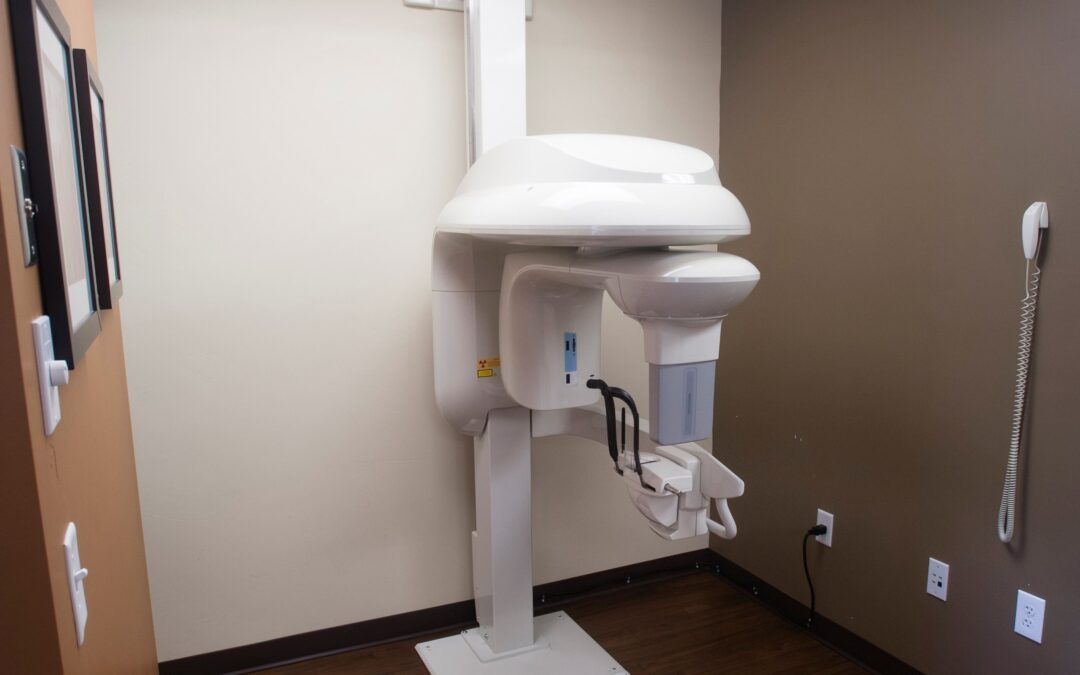
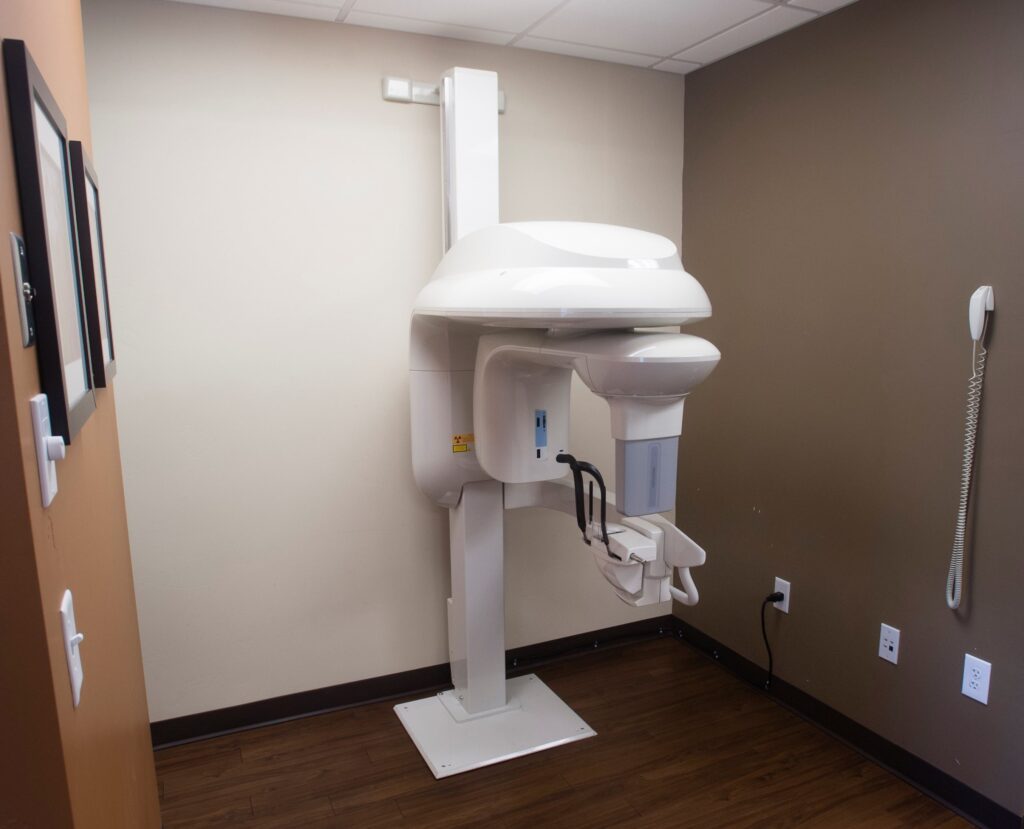
The dentist can make a smooth transition by choosing a knowledgeable endodontist. What does knowledgeable mean in today’s fast-changing office environment? “An endodontist has to be technologically up to date,” answers Dr. Allen. Cone beam computed tomography is a relatively new technology employed by well-trained endodontists “A CBCT contributes to a fast, accurate diagnosis is vital,” she adds. “And experience, having seen difficult and unusual situations, and being comfortable with problem solving–is also helpful,” she adds.
An endodontist who can calm an anxious patient, then explain the problem and offer clear solutions is a valuable asset to a dentist as well as to the patient.
“Whether it’s a complex retreatment of a root canal, an apico surgery or extraction followed by a dental implant placement, clear communication and doing what is best for the patient is the basis for long-term relationships,” Dr. Allen adds.
