
by Dr. Jacqueline S. Allen | Apr 21, 2016 | Blog, Root Canal
 While modern root canals are safe, effective procedures that usually eliminate tooth discomfort, if you’ve never had one, you may not know what to expect immediately after your procedure.
Here is a list of things to look for and be aware of in the days, weeks and months after your root canal treatment.
The first few days
- Don’t eat anything until the local anesthetic wears off, to avoid biting your cheek or tongue.
- Take over-the-counter or prescription pain relief medication as directed by your endodontist to deal with any discomfort after the procedure.
- To reduce post-operative swelling, you may apply ice on the cheek on the side of the face that is impacted. Try applying the ice for 10 minutes on, then 20 minutes off.
- Eat a soft diet for the first two days after the root canal. Avoid chewing directly with the tooth that received the root canal until a crown or other permanent restoration is in place.
- Brush and floss the affected tooth as you normally would.
The next few weeks
- Any discomfort you feel from the procedure itself should abate within 3 or 4 days. If it doesn’t, contact your endodontist immediately.
- If the temporary filling placed in your root canal comes out, have it replaced immediately. It’s normal to have a thin layer of filling wear off, but if all of it has come out, re-infection is a real danger.
- Make an appointment within two weeks of the root canal to receive a permanent restoration. A permanent filling or crown must be placed to ensure that bacteria don’t leak into the canal.
6 months and beyond
- It’s important to visit your endodontist occasionally after your root canal. He or she can monitor the impacted tooth and ensure the healing is continuing to progress properly.
- Although 95 percent of root canals are a success, it’s possible for a tooth to need retreatment later. The treated tooth can be damaged by injury, or become infected, or suffer extensive tooth decay, and need a root canal retreatment years or even decades later.
“Root canals are an easily tolerated procedure that is the treatment of choice to save an injured or infected tooth,” says Dr. Jacqueline S. Allen of the Phoenix Endodontic Group. “Understanding what to watch for during the post-op period will increase its likelihood of success.”
by Dr. Jacqueline S. Allen | Apr 18, 2016 | Blog, Business, Endodontics, Endodontist, Phoenix Endodontic Group
The entire team at Phoenix Endodontic Group has a keen awareness that we are here to provide gentle and individualized care to all patients entrusted to us by our referring doctors or that have sought us out on their own. There are many endodontic specialists in the Valley, and we realize that we must always “be at our best” relative to patient care.
Understanding what patients are seeking when they come to our office helps us be able to define what sets us apart from other endodontic specialists.
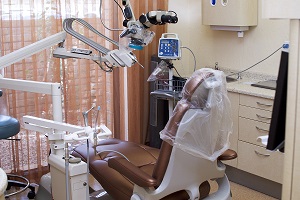
- Patients want to be treated with the state of the art equipment – Phoenix Endodontic Group consistently makes investments in technology and training to be able to deliver the best in modern endodontic therapy to our patients.
- Patients want their endodontist to listen to their concerns and fully answer their questions relative to treatment options – Phoenix Endodontic Group is the only endodontic practice in the Phoenix/Paradise Valley area with all-female practitioners. Dr. Jacqueline Allen and I have many years of experience and training treating patients with endodontic pain. We take our time with consultations and develop a treatment plan with the patients best interests in mind.
- Patients need access to care when they are experiencing pain and discomfort. No one can predict when the need for a root canal will arise. Phoenix Endodontic Group has two conveniently located offices that are open Monday – Friday from 7:00am – 5:00pm on most days.
At Phoenix Endodontic Group we live by a simple rule – Treat our patients the way we wish to be treated when we receive care. Living by this rule has help to make us one of the top endodontic specialty offices in the Phoenix/Paradise Valley area.
by Dr. Jacqueline S. Allen | Apr 11, 2016 | Blog, Endodontics, Endodontist, Root Canal
 As a practitioner of general dentistry, it’s your goal to provide quality service to your patients, even in the most challenging clinical circumstances. Sometimes, that means referring a patient to be treated by a dental specialist.
For cases in which a natural tooth is threatened by infection or injury, the Phoenix Endodontic Group should be at the top of your dental referral list. Patients needing root canals, apicoectomies, or related procedures will benefit from the clinical expertise of the dentists at Phoenix Endodontic Group.
- Endodontists have two to three additional years of specialized training beyond dental school, focusing specifically on the treatment of tooth root disorders.
- Endodontists have a higher daily volume of clinical experience with procedures such as root canals — some average as many as 25 root canals per week.
- Endodontists have access to cutting-edge tools and microsurgical techniques, making the process safe and effective for patients.
- Endodontists are specialists in pain management and complex cases, with significant experience in saving highly damaged or severely infected teeth.
You may especially want to consider making a referral if you have a case that involves:
- The inclination or rotation of a tooth
- l Tooth roots or canals that are curved
- l Radiographs of the tooth that indicate the presence of a pulp stone in the canals
- l A tooth with a post or a crown
“General practitioners are held to a specialist’s level of care, so it’s important to have a strong referral network when you encounter a complex or challenging case,” says Dr. Allen of the Phoenix Endodontic Group. “Our practice specializes in difficult-to-treat cases. You’ll look good for referring them, and your patient will feel good after the procedure.”
by Dr. Jacqueline S. Allen | Mar 21, 2016 | Blog, Dental Implants
 When a client visits an endodontist’s office with an infected or damaged tooth, most of the time, the practitioner is able to save the natural tooth. However, sometimes this isn’t possible, and then it is necessary to extract the tooth and replace it with a dental implant.
Implantology is the branch of dentistry that deals with the permanent implantation of artificial teeth in the jaw. Dental implants are provided using the following general process when it is determined that a natural tooth must be removed.
- After a careful diagnostic examination has been conducted, the natural tooth is extracted.
- The jawbone is then prepared for the dental implant surgery. Some clients do not have sufficient bone density in their jaw to ensure a successful implantation, so it must be augmented with bone grafts prior to the implant process.
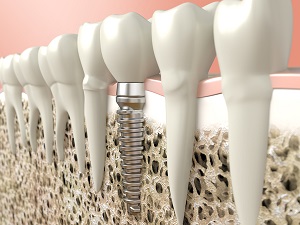
- During the dental implant surgery itself, the oral surgeon makes a cut to open the gum and expose the bone. Holes are drilled into the bone where the dental implant metal post will be placed. Since the post will serve as the tooth root, it’s implanted deep into the bone.
- After the post is placed, a waiting period is necessary to allow osseointegration, or for the post to integrate itself into the jawbone to provide a firm foundation for the dental implant. Often, a temporary tooth is provided during the waiting period (which can last up to six months), or the surgeon can suture the gum over the area containing the post to let it heal.
- Once osseointegration has taken place, the oral surgeon will place the abutment and the crown. The crown is a fixed prosthesis, meaning it is permanently attached to the jaw and does not need to be removed the way dentures or removable bridges do.
The Phoenix Endodontic Group considers the study of implantology to be a natural progression of their work as endodontists. Dr. Jaqueline S. Allen takes advantage of CE and study workshops that are offered on Endodontics and Implants – and always provide treatment in the patients best interest.
“Dental implants are a safe, effective means for restoring full function to a client’s mouth when their natural tooth must be extracted,” says Dr. Allen.
by Dr. Jacqueline S. Allen | Mar 15, 2016 | Blog, Endodontics, Root Canal
 Root canals have definitely evolved over the last several decades. For many years, root canals were synonymous with untoward events in people’s lives. Common phrases such as “I’d rather have a root canal than…” or “that hurt worse than a root canal” have haunted the specialty that I am so passionate about, for far too long. Even more recently, a comment made by our very own president painted root canals as being less popular than his bank buy-out. Come on people. Are root canals really that bad?
The answer is simply, no; they are not! I have a phrase that I use when I complete a procedure and my patient says “well, that wasn’t as bad as everyone said it would be.” My reply is, “who wants to hear anyone say ‘my root canal was so easy; I didn’t feel a thing and it was a great experience?” Let’s face it, our world is so caught up in the horror stories that they believe to be true that they don’t really care or listen about the good experiences.
There have been so many advancements in root canal treatment! With the advent of new anesthetic techniques came the ability to treat teeth in one visit and with much less discomfort than before. With the advent of nickel titanium rotary, instruments are more efficient and have reduced clinical treatment times. With the advent of microscopes came the ability to see microfractures and additional canals that we never knew were there before. And with the advent of cone beam computed tomography, we gained the ability to discern between the teeth we should be treating, and those that are hopeless and should be extracted.
On March 27-April 2, the American Association of Endodontists will present its tenth annual Root Canal Awareness Week. This is a special week that we use to educate patients and remind clinicians of all the ways that root canal therapy has changed over the years. For the better!
Have a question about root canals? Leave a comment below or visit our website.

by Dr. Jacqueline S. Allen | Mar 8, 2016 | Blog, Endodontics, Endodontist, Root Canal
 No matter how permanent something seems in our lives, the element of change is always in play. Telephones have evolved from a device affixed to a wall that had us shouting into a large funnel to send our voice across the wires, into today’s “smartphones” that are basically tiny computers that fit in our pockets. We’ve transformed exercise gyms from places with vibrating motor-driven belts that jiggled our waists and thighs to slick suites offering Bikram “hot” yoga and Pilates.
Root canals – one of the key procedures used by endodontists to save weakened or infected natural teeth – have also evolved. The American Association of Endodontists showcase this progression during Root Canal Awareness Week, which this year will be observed from March 27 to April 2. The week casts a spotlight on how the root canal procedure has changed over the years and why endodontists are the best equipped providers to perform it.
Facts About Root Canals and Endodontists
- More than 15 million root canals are performed each year in the United States.
- Eighty-nine percent of patients who receive root canals from endodontists say that they are satisfied with the results they received.
- As root canal specialists, endodontists receive two to three extra years of training beyond dental school, and typically perform 25 root canals per week, compared to an average of less than two root canals performed each week by general dentists.
- Endodontists have the following advantages when they perform a root canal procedure: access to advanced equipment, knowledge of microsurgical techniques, and a professional focus on saving natural teeth and diagnosing and treating tooth pain.
“Family physicians turn to medical specialists, such as cardiologists and podiatrists, when their patients have serious health issues,” says Dr. Allen, an endodontist who practices with the Phoenix Endodontic Group. “General dentists turn to endodontists when your natural tooth needs to be treated with a root canal.”
