
by Dr. Jacqueline S. Allen | Jun 9, 2014 | Blog, Endodontics, Endodontist, Featured, Root Canal
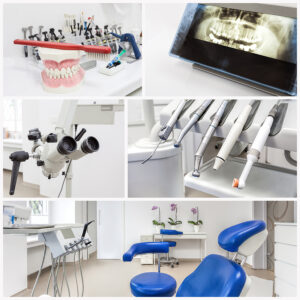 Chances are that most adults know of root canal treatment, but may not know what it involves. Root canal therapy is an extremely effective way to repair cracked or decaying teeth and prevent tooth loss. Dr. Jacqueline S. Allen of Phoenix Endodontic Group explains how this procedure can help you restore a bad tooth and why you shouldn’t be fearful of a root canal.
Gone are the days when root canal treatment was a major ordeal that left a patient in pain. With today’s methods and technology, many patients report minimal discomfort and compare it to having a filling done.
During the procedure, the infected pulp of the tooth is removed, the inside cleaned thoroughly, and the tooth refilled. This process restores the structure of the tooth. Any discomfort from the repair is mild and can be easily managed by using over the counter pain medication. As well, the materials used in the procedure have changed over the years. At one point in time, the material used to fill the roots was silver. Now it is gutta percha with antibacterial sealer, says Dr. Allen.
With time and experience, Endodontists have developed best practices to minimize complications, especially for patients who have severe symptoms or an unusual anatomy. We now use a rubber dam screen for all root canal procedures. This is to isolate the tooth so no bacteria from saliva can get in the tooth, as well as keep all instruments and disinfectants from falling into the mouth and possibly down the throat, Dr. Allen mentions.
Additionally, microscopes with optimal lighting are used to clean out the tooth roots more thoroughly, she states. All of these accumulated improvements equate to a better outcome, less risk of complications, improved comfort, and a great likelihood that your root canal treatment will be successful.
Once you’ve noticed a problem, it’s important to get treatment right away. Once the tooth has irreversible pulpitis or necrosis, the problem will not go away on its own, Dr. Allen says. Acting quickly improves your odds of a successful repair. For additional questions on root canal treatment or to schedule your appointment, contact Phoenix Endodontic Group today!
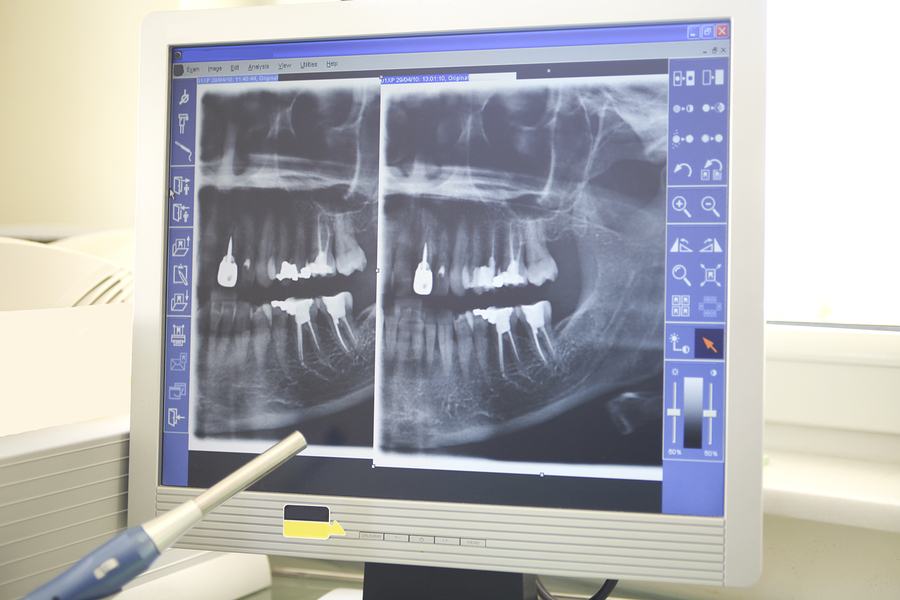
by Dr. Jacqueline S. Allen | Jun 2, 2014 | Blog, Endodontics, Root Canal
 A root canal treatment is a very effective way to save a damaged tooth, according to Jacqueline S. Allen, D.D.S., M.S. of Phoenix Endodontic Group. How do you know if you may need the procedure? The answer is sometimes very obvious!
Your tooth is composed of a hard shell (enamel), a soft inner material (pulp), many nerves and blood vessels, and the tooth’s root, which extends into the gums. Generally the tooth’s exterior protects the vulnerable insides from harm but occasionally a breach occurs.
A crack or chip, a cavity, dental disease, and decay can strike, allowing bacteria to invade the interior of the tooth. When this occurs, symptoms usually tell the tale. Temperature sensitivity, a pimple forming on the side of the tooth, pain when biting, swelling, throbbing, and waking up at night with tooth pain are all signs you may need a root canal, says Dr. Allen. You may not see visible changes, but chances are good that you’ll be experiencing the problem in other ways.
Occasionally a patient comes to an Endodontist with no outward symptoms but the damage is already significant. This is a great example of why seeing your family dentist for regular checkups is very important for early identification of trouble. By performing twice-yearly exams including bite-wing x-rays, your dentist should be able to see warning signs in their infancy and refer you to Dr. Allen’s office for treatment.
Many people have avoidance when it comes to tooth trouble, but this behavior can only make things worse. The tooth will not recover on its own once the decay has begun to destroy the tooth, and Pain, swelling, and possible loss of the tooth is the cost of delaying treatment, Dr. Allen states. The root canal procedure may need to be more extensive if decay is allowed to progress, so getting in quickly for treatment is really your best plan of attack.
If you’ve been suffering with tooth pain or other symptoms, call Phoenix Endodontic Group to schedule your appointment with Dr. Allen. Under her expert care, your tooth will be as good as new!

by Dr. Jacqueline S. Allen | May 23, 2014 | Blog, Endodontist
In 2012 and 2013, the Central Arizona Dental Society Foundation has hosted its Dental Mission of Mercy (AZMOM) event at the Arizona State Fairgrounds in Phoenix, AZ. Due to the overwhelming success of these events, we are proud to announce our 2014 CADS AZMOM Event. On December 12th – 13th 2014 we will once again be conducting our clinic @ the State Fairgrounds.

We utilize 100 portable dental units and require over 1,500 volunteers to make this event occur. Our first two events changed the lives of so many people. 300 dentists, along with at least as many dental assistants and hundreds of dental hygienists along with about 600 lay Volunteers. Dental supply companies contributed supplies and materials which assisted us in treating 2,020 patients and provided $1.5 million in free dental care over the two day period. These events were the largest charitable dental clinics ever held in the State of Arizona.
The emphasis will again be on basic dental care such as fillings, extractions and cleanings. Limited lab work (i.e., stainless-steel crowns for children, treatment partials) will be offered. The program is unable to treat patients with specific medically-compromising conditions (e.g., extremely high blood pressure, severe disabilities).
Our CADS AZMOM event focuses on:
- Providing free access to dental care while placing a high priority on patients suffering from dental infections or pain;
- Raising public awareness of the increasing difficulty low-income adults and children face in accessing critical dental care; and
- Creating health care advocates via the hundreds of lay volunteers participating in the event
Arizona residents suffer from higher rates of dental disease and benefit less from proven preventative methods than other states. A recent survey revealed that 21% of Arizona adults and 31% of Arizona children have never had a dental check-up.
The good news is that most oral diseases are preventable. In Arizona, 5% of children ages 6 months through 2 years have had tooth decay. By the time children reach 11 to 13 years, over 65% have experienced tooth decay, and by the time adults reach age 45, more than 99% have had decay.
Additionally, Arizonans report one of their major barriers to receiving dental services relates to finances. While 24% of Arizonans lack medical insurance, over 44% of adults and 38% of children lack dental insurance.
In summary, more Arizonans have dental disease than found nationally, while many report difficulty accessing dental services. Efforts such as AZMOM, which has treated over 3,500 individuals (two years), are needed to improve the oral health for children and adults in this state.
To learn more about this important event or to volunteer, log onto http://www.azmom.org, https://www.facebook.com/cadsazmom or https://twitter.com/CADSAZMOM.
» Learn more about Arizona Dental Mission of Mercy and the Event

by Dr. Jacqueline S. Allen | May 19, 2014 | Blog, Endodontics, Endodontist, Featured
Dental emergencies can happen in a split second, and can quickly result in lost teeth. Cracked teeth should send you running for a dental professional immediately since a crack can allow dangerous bacteria to invade, causing sensitivity, decay and tooth loss. How can you avoid cracking or fracturing your teeth? It’s simpler than you might think, according to Dr. Jacqueline S. Allen of Phoenix Endodontic Group.
Protect Yourself
“Most cracked or broken teeth are the result of dental trauma, either recently or in the past and no treatment was done at that time,” Dr. Allen says. This includes damage from sports injuries, falls or accidents, or chewing on hard objects or foods. Athletes should ALWAYS use a mouthguard and see the dentist or Endodontist for any dental emergencies that may occur. Never chew on ice or hard objects, and avoid using your teeth to open packages. Falls and accidents are a bit more difficult to prevent, but if you are able to protect your face and mouth when falling, make the attempt to do so.
 Routine Checkups
Dr. Allen explains, Dental restorations (fillings) that are 10 years or older should be looked at during a patient’s routine dental care. Fillings can break and chip and thereby expose the remaining tooth structure to potentially further break down. Age and location of prior dental work can play a role in damaged teeth which can lead to a dental emergency. To add to that, a routine dental checkup can identify small cracks that can be easily fixed, preventing them from developing into big problems down the road.
Keep Teeth Strong
The enamel of your teeth is a very hard substance, but one that can be eroded or damaged due to bad habits like soda drinking, eating sugary foods, brushing too hard, and chewing fingernails or ice. Brush with toothpaste that contains fluoride, floss regularly, and talk to your doctor about your calcium and vitamin D intake.
Many dental emergencies can be avoided by using caution and common sense. If you have cracked or fractured teeth already, Dr. Allen is here to help!
by Dr. Jacqueline S. Allen | May 12, 2014 | Blog, Endodontics, Root Canal
If you’re about to undergo a root canal, you probably have plenty of questions running through your mind. Dr. Jacqueline S. Allen of Phoenix Endodontic Group has performed this procedure countless times and offers this advice to prepare for yours.
 Getting ready for a root canal is mostly about following normal routines for mouth care beforehand. Continue to brush, floss, and rinse to keep your teeth and gums their healthiest before the root canal. The rest of your preparedness tasks are to make sure you have arrangements made for the day of the procedure and your after-care.
“Fortunately, most root canals are routine and require no special supplies or medical equipment to use after a procedure is completed,” Dr. Allen says. You’ll want to have on hand whichever pain reliever your medical doctor normally recommends. After a root canal is completed, most patients feel no discomfort at all and some may take a few days to feel before they heal completely, Dr. Allen adds.
“It would be a good idea to schedule your appointment at a time of day that allows you to go home after work, or visit the endodontist prior to work. Most offices are flexible regarding appointment times as long as it is not an emergency,” says Dr. Allen.
Once you’ve been scheduled, think about your post-procedure transportation. Most patients are able to drive themselves home, however “some people are sensitive and apprehensive about dental work, for those patients it is best that they arrange for a driver to take them home after treatment,” Dr. Allen cautions.
“Following the post-op instructions given to you by your endondontist after your root canal is the best way to ensure that you will enjoy a successful outcome. Those instructions can be to take ibuprofen/Tylenol for basic discomfort, take an antibiotic until it is finished (if one is prescribed) and do not chew or eat anything sticky or hard until you have had the permanent crown placed by your general dentist,” states Dr. Allen.
Call today to schedule your root canal with Dr. Allen and Phoenix Endodontic Group for the best result!
by Dr. Jacqueline S. Allen | May 5, 2014 | Blog, Endodontics, Root Canal
 Most people do have to face the fact that at some point in their life, they will have a tooth that “goes bad”, starts to cause pain and will need to have treatment to make it better. More often than not, a root canal can be performed and gives the patient many years of enjoyment free of pain and discomfort.
Even though a root canal is a great option for infected or abscessed teeth there may come a point where the patient considers a dental implant as a treatment option. The use of dental implants as a valid option has exploded in the last 10 years. Initially it was touted that extracting a tooth and placing an implant was a “permanent solution.” Studies have shown that implants can and do fail and are far from a permanent solution to tooth pain.
A common debate is “root canal vs. dental implant”, which is best for the patient?
As with many dental questions, there is no one right answer to this question, it depends upon many factors, patient’s age, overall health, opposing tooth and cost. Root canal cost v. implant cost is what we will probe in this article. In general terms, a single tooth implant will cost significantly more than a root canal. Let’s use a molar tooth in this example.
The root canal cost breaks down as follows: Exam, x-ray, root canal, buildup, crown. For a tooth to be fully restored after a root canal, it can take as few as two weeks.
The dental implant cost breaks down as follows: Exam, x-ray, extraction, bone graft, implant surgery, healing abutment and crown. Some dental implants can be placed immediately after extraction, however most of the time the extraction site has to heal for up to six months and the patient uses a stay plate or flipper to fill in the hole. A dental implant is a surgical procedure and the healing time for each patient can vary.
Here are the costs side by side, using the Usual and Customary Fees in the Phoenix, AZ area for endodontists and periodontists for a molar tooth:
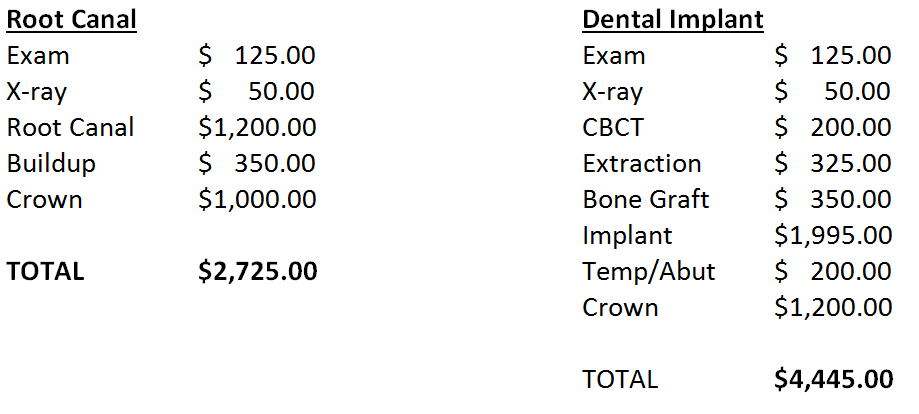
There are a lot of variables regarding both procedures, and the example above shows what the costs could be if you needed all of the services listed. The costs shown are representative of the root canal cost and dental implant cost and services in our market. As mentioned above, neither dental implants or root canal treatment will last forever. Before making a treatment choice, a patient should weigh all of the factors involved, speak with their general dentist and endodontist in order to make the most informed decision based on the individual.
