
Millions of teeth with disease of the pulp and periradicular tissues are saved every year through endodontic treatment. Despite the high clinical success rates of nonsurgical root canal treatment, there are times when an endodontically treated tooth may exhibit post-treatment disease requiring further intervention.
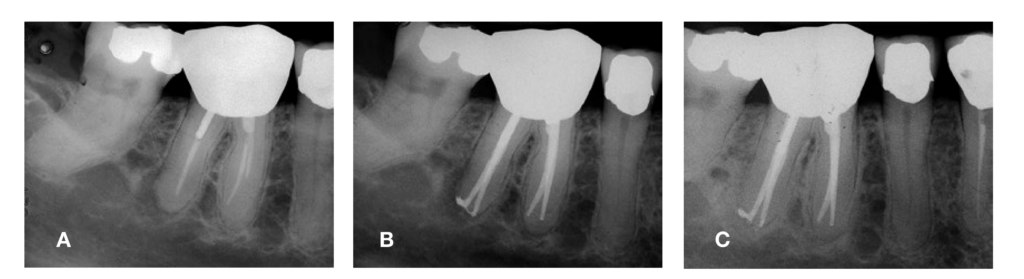
Previous root canal therapy (A) with symptomatic apical periodontitis due to a missed distal canal and short fills of the mesial canals. Successful nonsurgical retreatment (B) results in complete healing and an asymptomatic patient at the 19-month re-evaluation (C).
Post-treatment endodontic disease has four possible etiologies: microorganisms that are retained or reintroduced into the canal system, microorganisms that survive in the apical tissues outside the canal system, foreign body reactions in the apical tissues, and the presence of true periapical cysts (1, 2). Treatment for intracanal microorganisms includes both surgical and nonsurgical options, but the other three etiologies only can be treated surgically. Because it is often difficult to determine the causes of post-treatment endodontic disease, a thoughtful, evidence-based approach to treatment planning is necessary.
READ MORE IN ENDODONTICS: COLLEAGUES FOR EXCELLENCE SPRING 2017 – DOWNLOAD HERE