
by Dr. Jacqueline S. Allen | Feb 15, 2017 | Blog, Endodontics, Root Canal
 These days, it’s becoming more and more important to be a skeptical reader when it comes to researching medical information online. While a lot of quality sites exist, some websites perpetuate misinformation, making it harder to “do your homework” before you speak with your general dentist or an endodontist about important dental procedures such as root canals.
Here are three common myths about root canals that are often found when doing an online search, as well as accurate information to counter each falsehood.
Busting the Top 3 Myths About Root Canals
Myth #1: Root canals are painful. It’s easy to see why this myth exists. Many patients who come in for a root canal are suffering from the pain of a damaged tooth, or have decay that is causing the pulp of the tooth to become infected. These conditions can be very uncomfortable and can endanger the natural tooth. However, root canal treatment typically relieves the pain caused by these conditions, and preserves the natural tooth, as well.
Myth #2: Root canals are only a temporary solution. While few dental treatments last a lifetime, if a root canal is done by a qualified endodontist, its benefits can last for many years, even decades. It’s important to have a restoration such as a crown placed over the root canal to protect it afterward and to continue a regular daily brushing and flossing routine to ensure the treated tooth remains strong.
Myth #3: Extractions are often a better choice than getting a root canal. Because of the difficulties in chewing and speaking that occur when one loses a natural tooth, and the danger of bone resorption if enough natural teeth are extracted, a root canal should at least be considered when a natural tooth is failing. Root canals have a success rate of 85 percent or more, and a tooth that’s had a root canal done can also receive a root canal retreatment or an apicoectomy if additional treatment is needed to stabilize and save the tooth.
“Root canals are a cost-effective, safe, comfortable way to preserve your natural teeth,” says Dr. Jacqueline S. Allen, who practices with the Phoenix Endodontic Group. “Learn the facts about the procedure and don’t hesitate to call a dental professional if you need a consultation.”

by Dr. Jacqueline S. Allen | Jan 18, 2017 | Blog, Dentistry, Endodontics, Endodontist, Phoenix Endodontic Group
 When we make an appointment to see an endodontist, there is usually a pressing reason to do so: an infected tooth needs a root canal, a tooth has been dislodged or knocked out and needs to be placed back in the mouth, etc. While we can’t always avoid situations that lead us to needing endodontic treatment, there are actions we can take that will lower our risk of suffering infected or damaged teeth. Here are a few dental care tips to get your new year off to a great start.
Dental Care Tips for 2017: Priorities for Protecting Your Teeth!
- Prevent tooth decay. Help your natural teeth remain strong by protecting them from plaque by brushing twice daily and flossing once a day. The way your toothbrush is held makes a difference as to how effective your brushing is. The right way to brush your teeth is by holding your toothbrush at a small angle against your teeth. Don’t brush too hard – that just irritates your gums.
- Take care of your gums. Speaking of gums, if you skip out on building a daily oral hygiene regimen and don’t show up for your regular dental check-ups – which gives dental professionals a chance to examine the state of your oral health and clean your teeth thoroughly – you may end up with a gum disease such as gingivitis or periodontitis. Gum diseases produce almost no outward symptoms until they are quite advanced, so it’s important to focus on prevention and receiving regular dental care.
- Protect your teeth from damage. There’s a lot you can do to prevent your teeth from becoming damaged. First and foremost, if you play a contact sport, use a mouth guard. Teeth can also become cracked or chipped through grinding one’s teeth (bruxism), or biting down on a food such as nuts or hard candy. Sometimes the damage to your teeth is not visible to the naked eye; it’s always a good idea to have your dentist examine your teeth if you have symptoms such as only being able to chew on one side of your mouth due to pain, or having a tooth that’s extra sensitive to hot or cold foods.
“Even though proper dental care can’t guarantee that you won’t need to see an endodontist in 2017, it will improve your dental health overall, and that should help you bounce back from any challenges to your teeth that might come your way,” says Dr. Allen, who practices with the Phoenix Endodontic Group.

by Dr. Jacqueline S. Allen | Dec 28, 2016 | Blog, Endodontist
If you’ve received a referral to a Phoenix endodontist, you know that your general dentist wants your oral health issues to be assessed by a specialist. While the extra training and experience that an endodontist receives can reassure you that your teeth are receiving the best care possible, it also can be helpful to understand precisely how endodontists do their work. Here’s a brief look at how your Phoenix endodontist will work to save your smile and preserve your natural teeth whenever possible.
How Phoenix Endodontists Can Save Your Smile
 An endodontist can save teeth impacted by decay with several different procedures.You’ve probably heard about root canals and know that endodontists perform them to save natural teeth compromised by decay and/or infection. However, they also can perform a retreatment if a tooth treated by root canal shows signs of the infection returning; or they can treat a compromised tooth with an apicoectomy when infections persist in the bony area around the root of the tooth.
An endodontist can save teeth injured by trauma. Many patients are aware that root canal treatments are done by Phoenix endodontists when a tooth has become infected or suffers from decay; fewer are aware that endodontists are frequently recommended as the specialist to see when a natural tooth is cracked, chipped or even knocked out of one’s mouth! Damaged natural teeth often suffer disruption to their root canals, which opens up the possibility of the tooth pulp becoming infected. Endodontic treatment can ensure the tooth will be healthy enough to remain in the mouth.
An endodontist can save teeth with the use of cutting-edge technology. One of the reasons endodontists have become so successful in saving natural teeth is because improvements in materials and instruments used in endodontic treatments have revolutionized the field over the past 30 years. Today, endodontists are reviewing the use of lasers for more effective disinfection, computed tomography imaging (CBCT) to get a 3-D view of a patient’s tooth, and other technologies to make treatment of your natural teeth faster, safer, less painful and more effective than ever.
“Your Phoenix endodontist is an important ally in keeping your smile healthy and whole,” says Dr. Jacqueline S. Allen, who practices with the Phoenix Endodontic Group. “Our specialty has many ways to help you preserve your natural teeth for a lifetime!”
by Dr. Jacqueline S. Allen | Dec 7, 2016 | Blog, Cracked Teeth, Endodontics, Endodontist
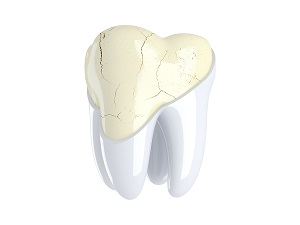
There are several different types of cracks that teeth can develop and they have a wide variety of symptoms. The most common symptom that you may have a tooth that is cracked is unpredictable pain with chewing especially with the release of the biting pressure. Some patients experience pain with hot or cold, while others may continue to only have occasional biting sensitivity. In many cases, the pain is very episodic and can refer to other areas of the mouth, which may make it difficult for the patient and the dentist, to determine which tooth is the source of the discomfort.
Because there are various types of cracked teeth and the severity of the crack determines which treatment is best for the patient.
- A cracked tooth implies that a crack in the hard, exterior portion of the tooth has extended internally. If the crack does not affect the pulp, then a crown will be needed to save the tooth. If the pulp is affected, then a root canal procedure and a crown will be necessary. If the crack extends past the pulp and into the root structure below the bone, then the tooth should, in most cases, be removed.
- A split tooth is often the result of a long-standing crack that was never treated and therefore creates distinct segments that can be separated. The tooth cannot be saved intact, but depending on the position of the crack, a portion of the tooth may be saved with a root canal procedure.
A vertical root fracture is one that starts in the root structure and extends toward the chewing surface. These teeth rarely show symptoms and therefore, can sometimes go unnoticed until the surrounding gum tissue and bone become infected. The majority of these teeth must be extracted due to the prolonged progression of disease by the time the issue is discovered.
A cracked tooth does not only affect the surface. Several layers of a tooth can be victims of the crack, depending on the size. Under the outer, hard, white layer of enamel, is a softer substance called dentin and inside of that, is the dental pulp, which contains the nerves and blood vessels and is what is removed during a root canal procedure. A cracked tooth is painful because when the outer hard tissues of the tooth are cracked, chewing on it can cause the pieces to move which can irritate the pulp. Eventually the repeated stress on the pulp will damage it irreparably. This will lead eventually to is death and infection to the tooth, and possibly the surrounding gum and bone.
Unfortunately, cracks in teeth do not heal; even when treated, they may continue to progress and separate, which may result in the loss of the tooth. Placing a crown on a cracked tooth is the best way to provide maximum protection, but is no guarantee that the treatment will be successful, long-term. However, once these teeth are treated properly and in a timely fashion, they can continue to function for a lifetime.
Cracking a tooth may not always be preventable, but there are some things that you can do to help make your teeth less susceptible to cracks.
- Avoid chewing on extremely hard objects, such as ice, popcorn kernels that are unpopped, hard candy or other extremely hard objects.
- Avoid clenching or grinding your teeth if you are aware.
- If you clench or grind your teeth at night when it is impossible to control, discuss a professional night guard or retainer with your dentist.
- Always wear a protective guard when engaging in contact sports.
The overall outcome for the tooth, and the type of treatment necessary to help save it, varies, depending on type, location and extent of the crack. If a patient is concerned that they may have a cracked tooth, it is imperative to see your endodontist (this is someone who specializes in saving cracked teeth) as soon as possible. The more time that passes without treatment, the greater the risk of the fracture growing in size and spreading into the root, which would necessitate an extraction of the tooth.

by Dr. Jacqueline S. Allen | Dec 5, 2016 | Blog, Endodontics, Endodontist, Phoenix Endodontic Group
 At Phoenix Endodontic Group, we believe that our staff is what makes our practice so special! As a part of our employee spotlight series, this month, we are highlighting the work of our C.E.O. and Operations Manager, Kevin Conroy!
Q: Tell us a little about yourself—where are you from? Where did you get your degree?
A: I am originally from New York, but I have also lived in Virginia. I got my degree from James Madison University in Harrisonburg, Virginia.
Q: Have you always worked in the dental industry?
A: No, I used to be work for corporate finance at AT&T Capital and Wells Fargo financial leasing.
Q: How did you end up at Phoenix Endodontic Group?
A: My wife is Dr. Allen, and she wanted to grow the business, so I joined on. I serve as the C.E.O. and Operations Manager here at Phoenix Endodontic Group.
Q: What is your favorite part of working at Phoenix Endodontic Group?
A: No two days are ever the same here! I also love using state-of-the-art technology in order to deliver the very best services to our patients.
Q: What is a piece of advice you would offer to patients?
A: Don’t fear the endodontist! The process is not painful for most people.
Q: What is the most rewarding aspect of working at Phoenix Endodontic Group?
A: We treat our patients and referring offices the way we wish to be treated. We value integrity, honesty, and providing the finest endodontic care found anywhere.
Our team will restore your smile and heal you of pain. To learn more about our practice, or to schedule an appointment, call (602) 748-4190, or visit our website.

by Dr. Jacqueline S. Allen | Nov 14, 2016 | Blog, Root Canal
T here’s no reason to feel bad about being afraid of having a root canal treatment – but don’t let your fear stop you from doing something can be good for your health. More than half of Americans surveyed in 2014 said they were afraid of having a root canal performed, although more than three-quarters of those surveyed also said they wanted to preserve their natural teeth if at all possible – something that root canals have a very good track record of doing.
Here are a few of the top fears that people express about having a root canal treatment, paired with facts and advice to lower your fear level.
Fears and facts about root canals
Fear #1: Root canals are extremely painful.
Fact: Root canals usually relieve pain rather than cause it. Your endodontist may prescribe antibiotics to reduce infection, and he or she will use a local anesthetic to ensure the area being worked on is completely numb. The procedure itself, since it cleans out the canal and replaces the pulp of the tooth with an artificial material, has almost no pain associated with it, and post-operative discomfort is usually mild and of short duration.
Fear #2: If I have a root canal done, it may fail and I’ll have to go through the entire process again.
Fact: Root canal treatments have success rates above 90 percent, and if an appropriate restoration (such as a crown) is placed on top of the affected tooth, it can save the natural tooth for years if not decades to come. If a root canal does fail, there are additional options, including root canal retreatments and apicoectomies, that are available for saving your natural tooth.
Fear #3: If I have a root canal, I may lose the tooth anyway and I’ll have wasted money on the treatment instead of just getting an extraction.
Fact: Nothing can replace your natural teeth, so it’s best if every effort is made to save them. If you were to opt for an extraction, you’d also need to budget for a dental implant, a bridge, or dentures, the cumulative cost of which could cost far more than a root canal.
“When you have a compromised tooth that needs attention, it’s best to have the facts and not let your fears dictate the sort of treatment you receive,” says Dr. Allen, who practices with the Phoenix Endodontic Group. “Root canals can be an affordable, comfortable and effective treatment for an injured or infected tooth.”
