
by Dr. Jacqueline S. Allen | Sep 28, 2016 | Blog, Business
 You would think that the business of treating teeth with Root Canals in Scottsdale, Phoenix and Paradise Valley is boring business – I am here to tell you it is not. However, the workplace as we all used to know it has changed dramatically. This has to do mostly with changes in technology and the tools we use today to communicate with each other (internal), and with our patients and referring dentist offices (external).
Indeed the world has changed and rules that used to guide worker behavior and habits may no longer apply. Compared to today’s workplace, it feels like I began my business career at a time when “dinosaurs roamed the earth.” Contacting your co-workers wasn’t always just sending an Instant Message. Back in the day you had to be a little more creative.
1) Smoke Signals: Back when bartering was the foremost form of commerce, telling everyone that you had some hides to trade was as easy as sending a plume of smoke into the sky.
2) Morse Code: Samuel Morse brought texting to the 1830’s using dots and dashes, making it possible to ask your staff to”–..-/ -.-…–..”* without leaving your chair!
3) Long-Distance Calls: During the 1960’s, international calls would cost about $3.00 per minute – the equivalent of $25.00 today.
* Get my Coffee
Even in the stodgy old profession of dentistry, social media has forever changed the way business is done and how people communicate. If you are in pain and you need a root canal in Scottsdale, chances are you just type “Root Canal Scottsdale” into Google. Once you have found the name Phoenix Endodontic Group first in the search, you then access our web page and Facebook page. I am pretty sure that is how it is done today.
Mobile devices allow dental office staff to be more efficient and to look at information on their office in real time. This creates a challenge – understanding where the line is between work and personal as it relates to use of your own mobile device at work.
Here are 3 tips regarding social media/texting for employees in today’s workplace:
1. Put Family and Friends on Hold: Taking a few moments for personal calls and texts is ok as long as you keep it brief. Tell family members your hours so they know when they’ll hear back from you.
2. Friend request the Company, NOT your boss: Befriending coworkers and your boss on social media is a bad idea – you don’t want to mix work and play. That said, sharing company content online is a nice way to promote your company.
3. Texting at work is OK: Nowadays you are expected to be easily accessible which means email, messaging and even texting are all appropriate forms of workplace communication within office hours.
At Phoenix Endodontic Group, our staff understands that communication in our personal relationships and work relationships are constantly evolving and it’s important to be able to adapt in order to have a good work/life balance.

by Dr. Jacqueline S. Allen | Sep 14, 2016 | Blog, Cracked Teeth, Endodontics
 Tooth pain is almost always a signal that something is wrong inside your mouth and that you need to see a dentist immediately. The last thing you want to worry about in this situation is what day of the week it is.
Specialists with the Phoenix Endodontic Group, like many other Scottsdale endodontists, are able to see emergency cases on the weekend. However, what if you’re in pain, but not sure if it’s bad enough for you to see your Scottsdale endodontist? Here is a quick guide for assessing your weekend dental emergency and determining the best course of action to resolve it.
Weekend Dental Emergency Guide
- When to call 911. Some conditions mandate immediate medical care, including jaw fractures, jaw dislocations, lacerations of the soft tissues of the mouth and face, or an abscessed or infected tooth that is severely swollen and/or impacting one’s breathing or swallowing. The emergency room staff can stabilize your condition, so that your Scottsdale endodontist can then safely provide treatment to preserve your teeth.
- When to call your Scottsdale endodontist. If you’re not experiencing symptoms that are life-threatening, it’s appropriate to call your dentist or endodontist and request to be seen immediately. Cases of cracked and knocked-out teeth fall in this category. If you have badly decaying teeth and are experiencing symptoms of dental infection, you may need an emergency root canal treatment. Don’t hesitate to ask for weekend treatment – in these cases, you will be preventing a potential trip to the ER, not to mention reducing your pain.
- When to practice self-care at home. If your dental pain is very mild, you may choose to apply some self-care techniques over the weekend and call your Scottsdale endodontist on Monday. Avoid extremely hot or cold foods and beverages, take over-the-counter pain relievers for your toothache and gargle with warm salt water to keep the area clean. If your symptoms get worse, don’t hesitate to make a weekend appointment to address the situation.
“Your treatment for your dental emergency should be predicated on what symptoms you have, not the date on the calendar, says Dr. Allen of the Phoenix Endodontic Group. “Our practice, or that of any Scottsdale endodontist, will be happy to see you get care during a weekend dental emergency situation.”

by Dr. Jacqueline S. Allen | Aug 2, 2016 | Blog, Endodontics
 The goal of endodontic treatment is to save the natural tooth for a lifetime. However, there are instances in which a dentist or specialist may decide that a tooth cannot be saved and, therefore, render it “non-restorable.” These teeth may also be called “non-retainable” because they cannot be retained in the mouth for any significant, predictable period of time.
Here are a few reasons why a tooth may be considered non-restorable:
- Extensive decay or destruction of the natural tooth structure—this scenario prevents a dentist from adequately restoring the tooth, leaving it susceptible to further decay, pain, and possible infection.
- Advanced periodontal issues—if periodontal issues are not controlled, this predisposes the teeth to recession, bone loss, and eventual loss of the tooth.
- Resorption is a dental process that occurs when the cells that surround the tooth begin to eat away at it, which is is typically due to some form of trauma.
- Iatrogenic causes can occur; these are typically induced inadvertently by a medical or dental professional during treatment or diagnosis. For example; some teeth can have root canal systems that are very calcified or small, and during the search for these, a hole (or “perforation”) can be created by the dental drill or instruments. If these perforations are not addressed and repaired in a timely fashion, or if the size of the perforation is too large to repair, the overall health of the tooth will be compromised in the long run.
- A crown-to-root ratio that is less than one to one is not ideal. In other words, the remaining tooth that is encapsulated in bone should be at least the same amount that is outside the bone. Torqueing forces that are exerted on the tooth are an unstable environment for any tooth, especially one that is already compromised.
- Certain types of trauma can lead to early tooth loss. For instance, if a tooth is avulsed, or “knocked out,” and is not put back into the socket within one hour (depending on stage of root development), the overall prognosis for retaining that tooth is poor, and the tooth will eventually be non-retainable.
- Vertical root fractures will inevitably doom a tooth to failure. A root that has a fracture extending vertically, especially if it communicates with the oral cavity, has a hopeless prognosis and is considered non-retainable.
Like with any dental procedure, it is the obligation of the treating dental professional to present his or her patient with dental treatment options, along with the likelihood of success associated with those options. Our duty as endodontists is to provide our patients with all of the necessary information about their oral health, their treatment, and the projected outcomes of those treatments so that they can make an informed decision that is best for them.

by Dr. Jacqueline S. Allen | Jul 25, 2016 | Blog, Dental Implants, Endodontics
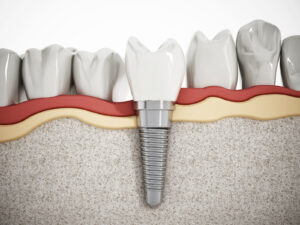 When you’re experiencing pain from a damaged or infected tooth, you typically have one top priority: to feel better quickly. Your dental team will likely recommend one of two treatment pathways for you at this point. You will either have to undergo a root canal treatment to save your natural tooth, or if your natural tooth is too damaged to save, you may have to get a tooth extraction and a dental implant.
Dental implants represent one part of a treatment spectrum that endodontists are qualified to perform, and root canals are located at the other end of this spectrum. Because patients frequently want to retain their natural teeth and associate endodontists only with root canals, it’s useful to review how dental implants fit into the endodontic treatment picture.
Dental Implants in Endodontic Treatment
- Implants are artificial devices that substitute for individual human teeth. A dental implant has three parts: a fixture, which acts as an artificial tooth root; an abutment, which supports and secures the dental work place on top of it; and a restoration, a crown or other dental prosthesis that “stands in” for the extracted natural tooth.
- Many factors come into play when choosing between a dental implant and root canal treatment. This is a decision that must be made on a case-by-case basis. A patient’s overall health, the health of his or her gums and jawbone, how many other natural teeth the patient currently has (and what shape they are in), and how many treatment “steps” a successful outcome would require are all important aspects that must be taken into account. While both treatments have a high overall success rate (greater than 90 percent), selecting the wrong treatment for a patient can lead to another future treatment intervention.
- Dental implants can be installed if a root canal fails and the natural tooth must be extracted, but not vice versa. If it is not immediately clear which treatment choice to make, endodontists and your entire treatment team will take into account the permanence of implants and will proceed with treatment planning and sequencing accordingly.
“Endodontists are familiar with dental implants, and they see them in the perspective of all they know about preserving natural teeth,” says Dr. Jacqueline S. Allen, an endodontist in practice with the Phoenix Endodontic Group. “They are particularly skilled in assessing the best course of treatment for a compromised tooth.”

by Dr. Jacqueline S. Allen | Jul 14, 2016 | Blog, Endodontist, Root Canal
 If your tooth has become compromised due to disease or injury, you may be wondering what a Scottsdale endodontist can do to help you. Since even the best dental implant doesn’t function as well as your natural tooth can, it’s important to understand how Scottsdale endodontists can save your natural teeth. Here’s a brief overview of the work that these dental specialists are trained to do.
How A Scottsdale Endodontist Can Save Your Teeth
- Endodontists’ training as dental specialists focuses on preserving the inside of your tooth. Endodontists receive two to three years of training beyond general dentistry, learning how to treat problems with the pulp inside your teeth and how to diagnose and treat problems in your root canals.
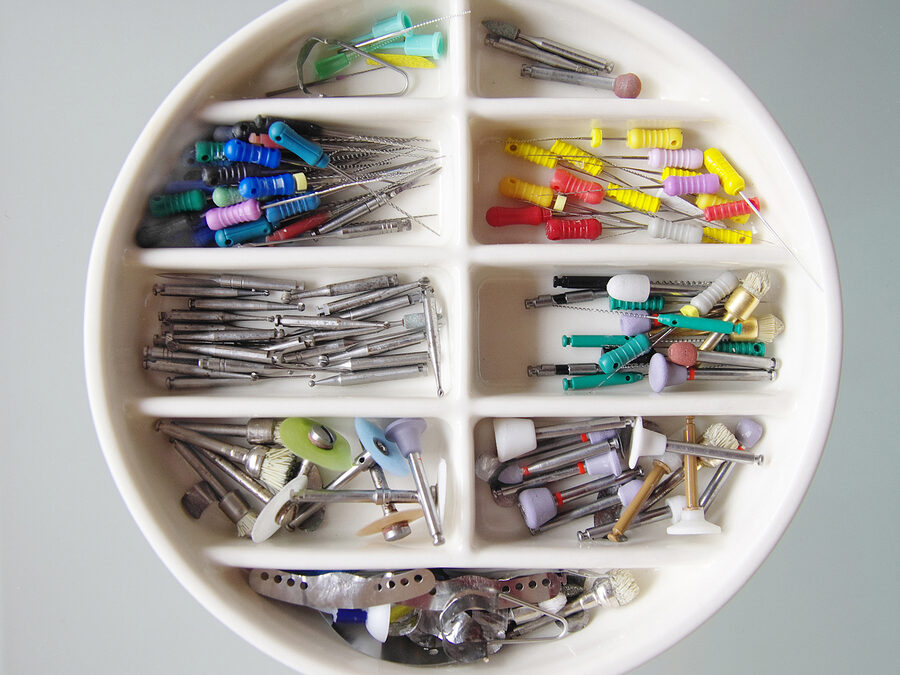
- Endodontists have access to special tools and materials to treat a damaged natural tooth. They are trained in the use of special cleaning files to remove infection from a root canal. They use the sealant gutta-percha to permanently seal off tooth roots that have experienced severe infection, and they prepare the tooth to be permanently protected by receiving a crown (and sometimes a post as well) to shore up the structure of the tooth. Because root canals often permanently resolve the damage to a natural tooth, in the long run, they can prove to be less costly and less invasive than opting for a dental implant.
- Endodontists are able to use a variety of procedures to save your natural tooth. Root canals are only one of the treatments that endodontists can utilize to preserve a compromised natural tooth. They can do a root canal retreatment if needed, as well as specialized procedures such as an apicoectomy.
- Endodontists are experts in relieving tooth pain. Scottsdale endodontists are able to quickly diagnose even baffling tooth pain, ensuring your natural tooth gets treated at the earliest possible moment.
“You don’t have to live with dental pain or have damaged natural teeth extracted,” says Dr. Allen, a Phoenix endodontist who practices with the Phoenix Endodontic Group. “Endodontic treatment can save your natural teeth and preserve your quality of life!”
by fisherwebdesign | Jun 29, 2016 | Blog, Endodontics, Phoenix Endodontic Group, Root Canal, Technology
 Endodontics became a specialty in the early 1960s, but dentists have been performing root canal procedures on patients since the 1800s. Thankfully, the world of root canals has come a long way since the turn of the 19th century.
Implementing a root canal has gotten much easier, and the overall outcome of the procedure itself has improved since the introduction of nickel-titanium files. These files were first introduced in the late 1980s and are made of a unique alloy that is extremely flexible, which helps to preserve the original anatomy of the root canal. This, in turn, results in better efficiency, predictability, and improved clinical results of endodontic treatment, especially in significantly curved canals.
Digital radiography is another handy tool that we use as endodontists. Originally introduced in the 1990s, it has certainly revolutionized the field of endodontics, as well as the entire dental community, by allowing the dentist to manipulate an image and provide a much higher overall diagnostic quality. Thankfully, it does this with much less radiation than was needed to capture a standard radiographic dental film in the past.
In addition to digital radiography, the operating microscope is relatively new in the endodontic world. Magnification and fiber optic illumination are helpful in aiding the endodontist by allowing him or her to see very small details inside the teeth that that need work. Also, a tiny video camera on the operating microscope can record images of a patient’s tooth to further document the doctor’s findings.
Finally, three-dimensional radiographs (cone-beam commuted tomography) allows endodontists to help diagnose potential issues more accurately and provide treatment with unprecedented confidence. Unlike a traditional spiral CT scanner, this 3D system provides precise, crystal-clear digital images while minimizing the patient’s exposure to radiation. This system allows for unmatched visualization of anatomical detail, which aids in diagnosis, treatment planning, and the actual root canal treatment. Your doctors can use this innovative technology to quickly and easily share 3D images of the area of concern with your referring doctor, giving them an opportunity to collaborate on your care, improve your experience, and deliver a positive treatment outcome.
Although there are many other advancements in endodontics on the horizon (stem-cell regeneration of the root canal system, as well as reconstructing the teeth themselves), the current ones allow for much better diagnosis, treatment planning, and pain-free root canals than ever before.
