
by Dr. Jacqueline S. Allen | Dec 4, 2023 | Blog, Endodontics, Endodontist, Root Canal
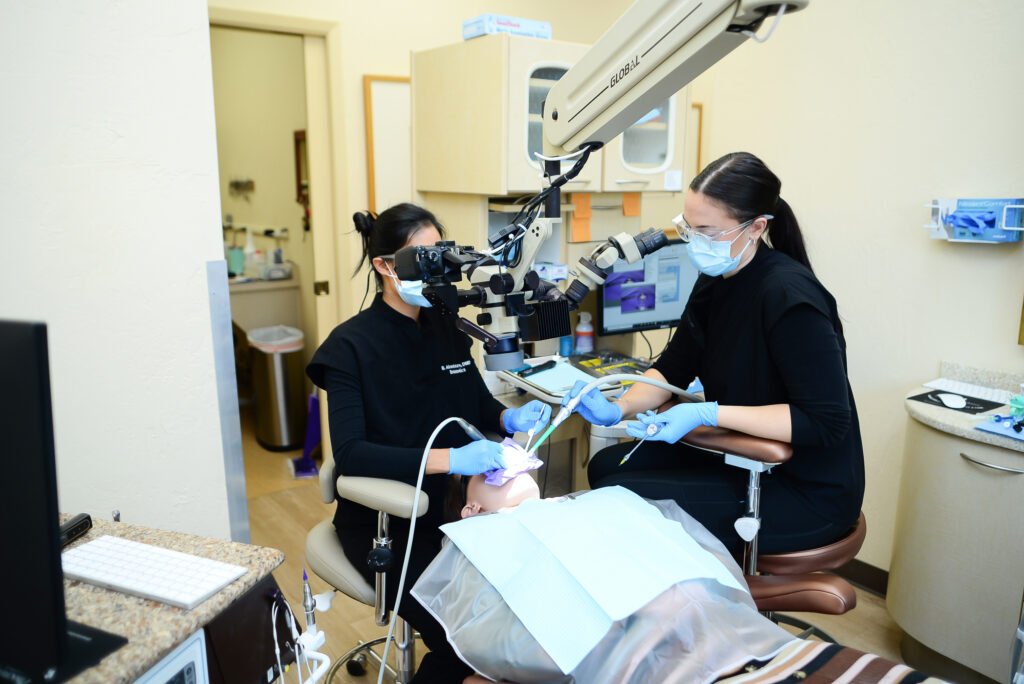
Root canal treatment of a damaged or infected natural tooth can enable it to last a lifetime. However, like most treatments, you as the patient must do your part to ensure your procedure is successful.
Proper root canal treatment aftercare can be divided into things you should do immediately after the procedure, during recovery week, and things you should do over the long run. Let’s take a look at each set of instructions so you’ll be well prepared when you have your root canal treatment.
Aftercare Tips: Immediately After Your Root Canal Treatment
Do not eat for several hours after your root canal. This allows the local anesthesia to wear off – you will avoid biting injuries due to numbness.
Do not smoke after your root canal treatment. Smoking tobacco impedes healing.
Make sure you have antibiotics prescribed by your endodontist. This allows you to continue to fight any infection in your tooth.
Keep the endodontist’s contact information handy in case there is post-procedure pain. You should NOT have excruciating pain after a root canal – if you do, call the office so they can look into what is happening.
Aftercare Tips: The Week After Your Root Canal Treatment
Do not bite down using the tooth that received the root canal. Until you’ve had a permanent restoration (usually a crown) placed, you could lose your temporary filling by putting biting pressure on the tooth.
Stick to soft foods while your mouth is healing. You can choose from delicious options that include scrambled eggs, smoothies, yogurt, pasta, noodle dishes, mashed potatoes, meatloaf, hummus, cooked vegetables, or sorbets.
Ease back into your regular activities. You can go to work in a day or two, and start exercising a few days after that. When in doubt, don’t push things; let your body guide recovery.
Aftercare Tips: When Your Root Canal Treatment Is Finished
Make sure you get the permanent restoration (usually a crown) placed over your root canal. This one step is critical to protecting the root canal and cannot be skipped.
Continue to brush and floss daily. You can care for your tooth that received the root canal as you would any natural tooth after the healing stage is complete.
Visit your general dentist regularly. They will monitor your overall oral health and can refer you to an endodontist if you need another root canal or a root canal retreatment.
“Most of the steps that we ask our patients to take after a root canal treatment are simple, but they should be followed closely,” says Dr. Jacqueline S. Allen, who practices with Phoenix Endodontics Group. “We are happy to discuss how to follow aftercare instructions and why they are important.”

by Dr. Jacqueline S. Allen | Nov 3, 2023 | Blog, Endodontics, Endodontist, Root Canal
When times are tough, folks yearn for the “good old days.” However, most of us wouldn’t really want to travel back in time for complex dental work. For endodontic procedures such as root canal therapy, patient outcomes and happiness have improved immensely, on the heels of improvements in technology and treatment techniques.
Here’s a brief list of just some ways root canal therapy has gotten better over recent generations.
Advancements In Root Canal Therapy
1. Diagnostic imaging, for better treatment. When root canals were first performed, dentists didn’t have even basic imaging technology to guide their work. Today, treatments can be pinpointed with Cone Beam Computed Tomography, allowing endodontists a full 3-D view of your teeth.
2. Local anesthetics allow a comfortable treatment. The earliest root canal treatments happened before the advent of anesthesia. Today’s patients have largely pain-free experiences through local anesthetics. Further, if dental anxiety is an issue, sedation dentistry can provide a gentle solution.
3. Microsurgical tools allow precision canal cleaning and shaping. The first root-canal shaping tool was developed by Edwin Maynard in the mid-1800s, created from a watch spring. Today’s precise tools for cleaning and shaping infected root canals are developed task-specifically, continually refined, and always crafted with your teeth in mind.
4. New cleansing technologies ensure more complete treatment. Top endodontic practices now use the GentleWave Procedure, a root canal treatment that uses fluid dynamics to ensure superior canal cleaning. The result is a faster, less invasive root canal with minimal pain and rapid healing.
5. Restorations ensure root canal treatments remain successful. Early root canal treatments were not followed by the placement of restorations such as a permanent crown. This critical step has hugely enhanced the long-term success rate of root canals, allowing a properly cared for root canal treatment to often last a lifetime.
At Phoenix Endodontic Group, practitioners use all our available advances to provide state-of-the-art treatment.
“When you enter one of our treatment rooms, every aspect of your root canal treatment has been evaluated and selected to provide you with the safest, most comfortable treatment possible. Our goal is preserving your natural teeth, so you can enjoy them for a lifetime,” says Dr. Jacqueline S. Allen, founder of the practice.

by Dr. Jacqueline S. Allen | Sep 6, 2023 | Blog, Dental Implants, Endodontist
Placing something artificial in your jaw can be intimidating. However, modern dental implant practice has been around for more than 50 years and is safe, health-enhancing, and life-changing.
If your endodontist recommends a dental implant to replace one or more natural teeth, understanding the process can help you better prepare. Here’s a brief summary.
Steps In The Dental Implant Process
Step 1: Evaluation and planning. Before the actual implant is placed, you’ll have an appointment where your endodontist performs a comprehensive examination. They will take X-rays or use technology like Cone Beam Computed Tomography (CBCT) to get a three-dimensional image. They also review current medical conditions (such as diabetes) and develop a treatment plan.
Step 1a (as needed): Bone graft. If your jaw isn’t strong enough to support the implant, you may need a bone graft before the implant. This requires a separate appointment, with time in between, allowing the graft to heal.
Step 2: Pre-op preparation. Your endodontist will discuss preparations for the dental implant procedure. This includes whether you need antibiotics or should eat before your appointment.
Step 3: Natural tooth removal/dental implantation appointment. You will receive anesthesia (local or IV), ensuring the procedure is pain-free. Failing natural teeth are removed. Next, the endodontist places a titanium tooth root implant in the empty bone socket. They finish with stitching the gums above the implant.
Step 4: Osseointegration. After your dental implant is placed, the healing period lasts several months. As the bone in your jaw recovers, it grows around the implant – a process known as osseointegration. This results in the implant being solidly anchored in the jawbone.
Step 5: Placement of abutment and crown. The final step is placing the abutment, which sits atop the implant post and attaches to a crown. If you are missing multiple teeth, the abutment can also attach a set of overdentures, replacing an entire arch of natural teeth.
“Dental implants take time, even if the implant procedure only takes one appointment,” says Dr. Jacqueline S. Allen, who practices with Phoenix Endodontic Group. “We are happy to discuss step-by-step the dental implant process, so you feel 100 percent comfortable 100 percent of the time.”

by Dr. Jacqueline S. Allen | Aug 7, 2023 | Blog, Endodontist, GentalWave, Root Canal
Phoenix Endodontics Group treats patients using the most up-to-date technology. We do this because advances inevitably bring a better experience and better post-treatment outcomes for patients.
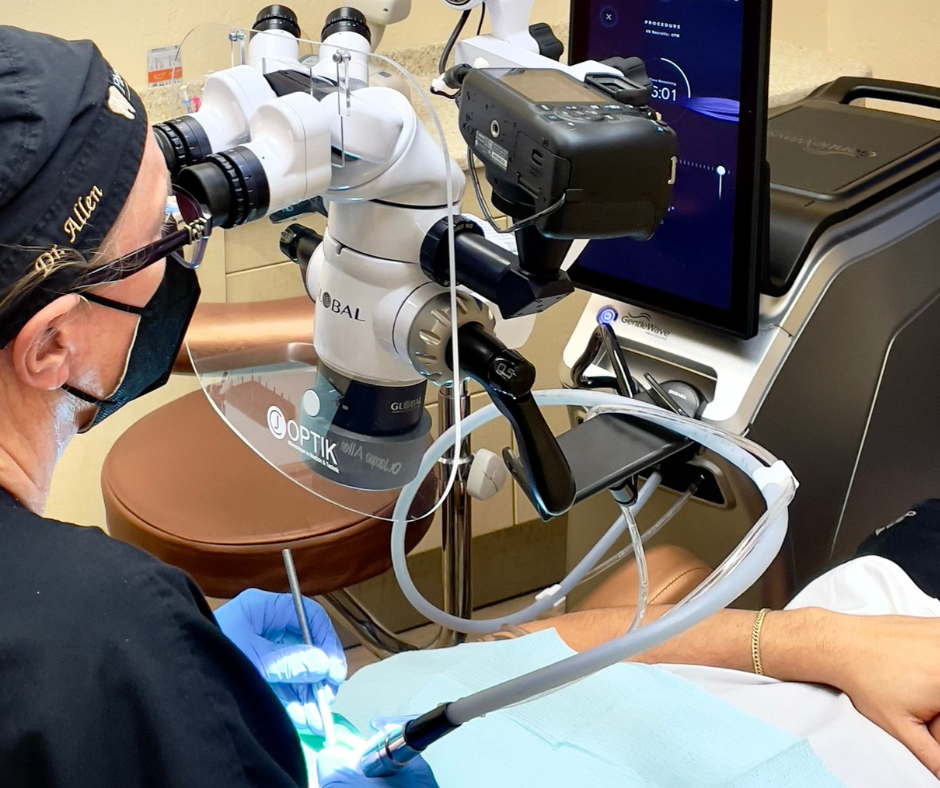
If you come to us for a root canal, we are likely to suggest the GentleWave Procedure. Let’s look at why we prefer GentleWave technology over traditional approaches to root canals.
GentleWave – Best Current Root Canal Therapy?
1. The GentleWave Procedure leverages fluid dynamics to flush root canals clean. A traditional root canal relies on cleaning with files and other special instruments. If a spot is missed, or a canal is hard to find, some infection can remain. GentleWave’s cascade of tiny imploding bubbles more completely removes biofilm, bacterial infection, and other material from the tooth.
2. The GentleWave Procedure reaches and shakes loose debris that even skilled endodontists miss. For complex root canal systems, treatment using the GentleWave Procedure provides extra assurance that all surfaces have been cleaned and disinfected.
3. The GentleWave Procedure is less invasive than traditional root canal therapy. For those with dental anxiety, root canals can be challenging. With GentleWave, there is less scraping and tapping in the canals and less pain, resulting in a less stressful experience.
4. The GentleWave Procedure requires less time for treatment and recovery. Our patients are pleased that their root canal therapy can be completed in one session most of the time! (They will still need to promptly see their general dentist for a crown to complete restoration.) They are also happy to find they are able to return to their usual activities more quickly than after a traditional root canal, too.
“Our implementation of the GentleWave Procedure for root canal therapy has been a win-win for our practice and our patients,” says Dr. Jacqueline S. Allen, an endodontist at Phoenix Endodontic Group. “We are able to provide a more comprehensive, less invasive treatment, and patients benefit from faster treatment and reduced recovery times with less pain and anxiety.”
by Dr. Jacqueline S. Allen | Jun 19, 2023 | Blog, Endodontics, Endodontist, Root Canal
Time is precious. That’s why, even when a natural tooth needs saving through a root canal procedure, we typically want to know how much time we’ll need to commit to the endodontist. Depending on the condition of your tooth, which tooth is getting the root canal, and a host of other factors, the amount of time needed for the root canal can vary considerably.
Here’s a brief look at some things that can impact the time required for your root canal – including care before and after the procedure itself.
Factors That Impact How Long A Root Canal Procedure Takes
1. The preliminary examination before your root canal procedure. This appointment is needed to confirm the diagnosis and help your endodontist plan your treatment.
2. You may need antibiotic treatment before your treatment. If your tooth is badly infected, you’ll need to complete a course of antibiotics before your root canal. This can delay your appointment or make the treatment itself more complicated.
3. Before the root canal itself, your endodontist will prepare your tooth. Before the actual cleaning of the tooth roots, your endodontist will have the area around the impacted tooth numbed with local anesthesia. Then a dental dam – a small sheet of latex or another material – will be placed to isolate the tooth and keep the area clean.
4. Root canal treatment itself can take anywhere from 30 to 90 minutes. This includes cleaning the root canals, flushing them with a disinfecting agent, and placing a temporary filling. Teeth with multiple roots may take longer.
5. After the root canal treatment, you’ll need to schedule a follow-up appointment to place a permanent restoration. To provide extra protection from reinfection or additional damage, a crown is the necessary final step in the root canal process. It’s important to get a crown placed quickly to protect against new infection and ensure the root canal treatment succeeds.
“At our practice, we understand our patients have busy lives, so we provide an estimate of how long their root canal should take, from start to finish,” says Dr. Jacqueline S. Allen, who practices at the Phoenix Endodontic Group. “We welcome questions about our time estimates and any additional steps they may want to take at home before or after the procedure.”
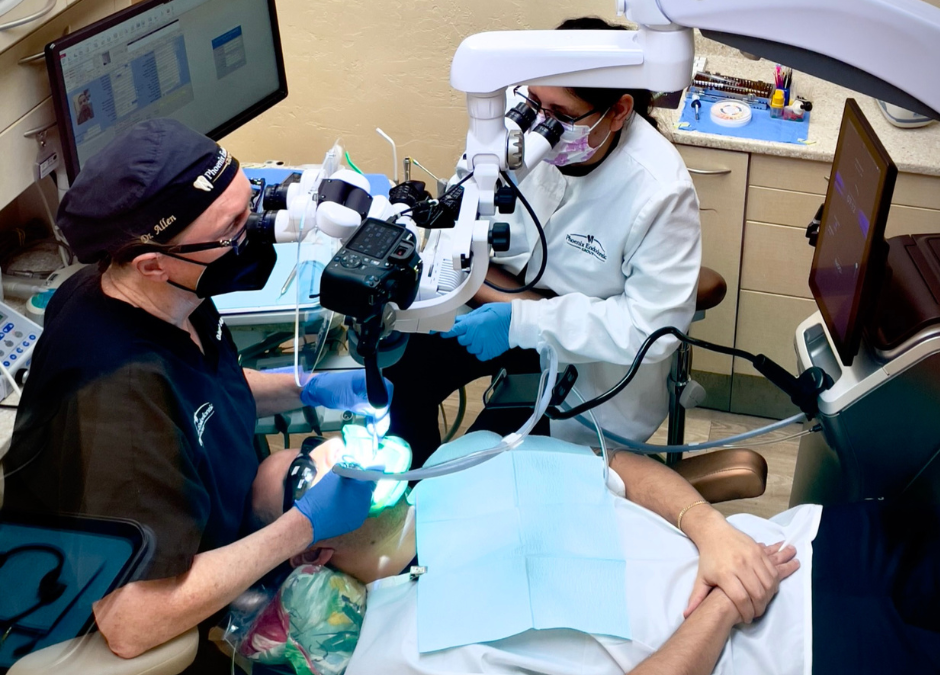
by Dr. Jacqueline S. Allen | May 10, 2023 | Blog, Endodontics, Endodontist, Save Your Tooth Month
Recent years have brought amazing advances in dental care. Veneers, crowns, and even dental implants are available to restore or replace many functions of natural teeth. Perhaps the most important advances of all relate to saving natural teeth, allowing you to use them for your entire lifetime.
The American Association of Endodontists (AAE) designates May as its “Worth Saving” public awareness month. This awareness campaign highlights the role that endodontists, who are highly trained dental specialists, play in saving natural teeth through root canal treatments and other techniques.
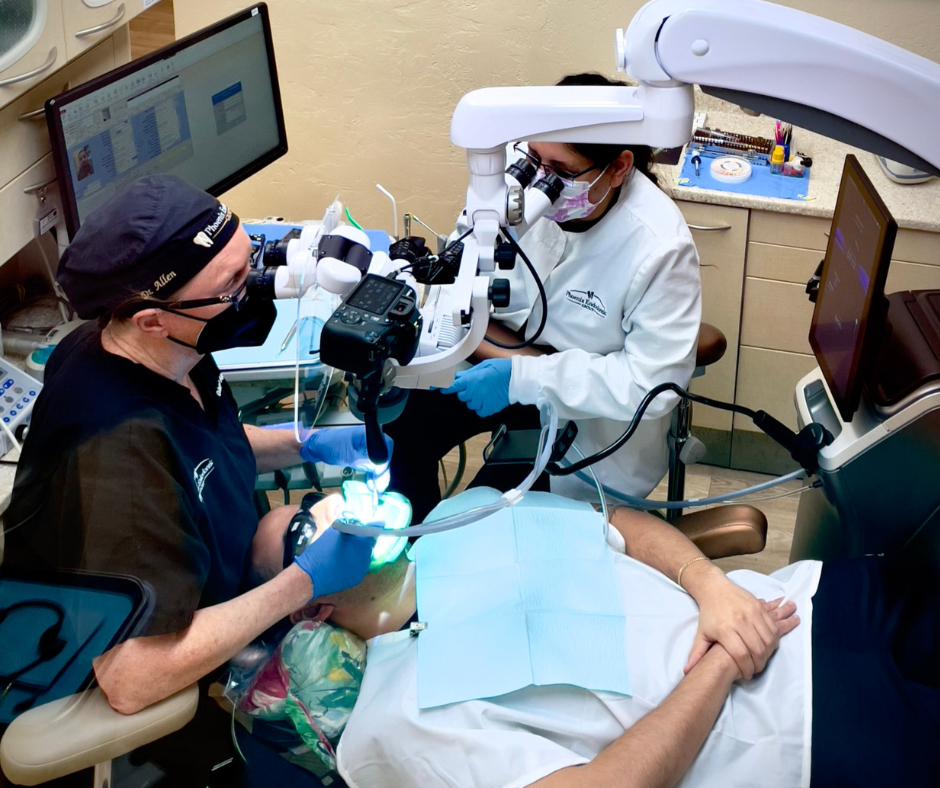
Reasons Natural Teeth Are Worth Saving
Given the replacement or restoration options dental professionals have when a natural tooth is compromised by decay or injury, why do endodontists work so hard to save your teeth?
1. Most people want to save their natural teeth. In a survey sponsored by AAE, 95 percent of respondents said it is important to save their natural teeth. In fact, nearly a quarter of Millennials (born 1980-1996) said saving their natural teeth is their top concern about saving or restoring their body.
2. Natural teeth have benefits that artificial restorations cannot mimic. Natural teeth have connections to the gum tissue around them through the periodontal ligament and an epithelial attachment. These connections help teeth adapt to changes when chewing or talking and also help sustain gum health. Dental implants lack these connections.
3. Treatments to save teeth are less invasive. A root canal treatment has less impact on your mouth than an extraction or implant. Your post-procedure pain and recovery time is also lessened.
4. Root canal treatments are often overall less costly. Teeth extraction by itself is not expensive, but implants can cost thousands, even if only one or a few teeth need replacement.
5. Treatments to save natural teeth are more cost effective. A 2009 British study determined that for a tooth that could be saved with a root canal treatment or a re-treatment of a previous root canal, the lifetime costs of endodontic treatment were equal or less than replacing it with an implant.
“Our natural teeth are designed to last a lifetime, and they can last a lifetime, with proper care and the assistance of endodontists if a tooth is badly infected or injured,” says Dr. Jacqueline S. Allen, who practices with the Phoenix Endodontic Group. “Our staff welcomes you to discuss your case with us. We’re happy to help you experience the benefits of saving your natural teeth.”
