
by Dr. Jacqueline S. Allen | Oct 18, 2017 | Blog, Endodontics, Phoenix Endodontic Group, Root Canal
The last several weeks in October seem to be high season for those who love all things scary, including horror movies, gory Halloween costumes and the like. But very few people seem to use the season to embrace their fears of real-world situations. If the prospect of getting a root canal has you quaking in your boots more than a trip to the store to buy your Halloween costume, let’s address several common fears about them, so you can take that dental procedure out of your personal mental category of “spooky.”
Getting Over Your Fear Of Root Canals
Fear #1: My root canal treatment will be painful.
Fact: The tools and techniques that endodontists currently use to work with patients minimize pain and maximize the chances that he or she will be able to save your natural tooth. The discomfort you might experience during a root canal is similar to what you might experience if you were having a tooth filled. For many patients, a root canal actually relieves the pain they’ve been experiencing due to an injured or infected tooth.
Fear #2: My root canal treatment will involve frightening procedures or loud noises.
Fact: One fear common to many types of dental anxiety is undergoing a treatment involving complex, unfamiliar activities or which involves loud noises. Your endodontist can explain how he or she will perform the root canal, and is able to offer an array of remedies to keep you calm and comfortable during the procedure.
Fear #3: My root canal treatment won’t last, so why bother?
Fact: Some patients hesitate to get a root canal based on the faulty belief that they’re rarely successful, and wonder if they should just move directly to getting the tooth extracted. The data on root canals show that they preserve the natural tooth 95 percent of the time, so it is definitely a procedure worth considering!
“There are a lot of situations in life that require caution and heeding one’s fears, but root canals simply aren’t one of them,” says Dr. Jacqueline S. Allen, who practices with the Phoenix Endodontic Group. “Your endodontist can help you overcome your fears related to this important dental procedure.”
by Dr. Jacqueline S. Allen | Oct 12, 2017 | Blog, Endodontics, Phoenix Endodontic Group
Suzie Salas, second from the right.
As part of our Employee Spotlight series, this month we are featuring our amazing dental assistant, Suzanna Salas. At Phoenix Endodontic Group, Suzie offers extensive dental knowledge and proves herself to be a key asset to our team. Suzie provides exclusive tips and unique insight regarding Phoenix Endodontic Group.
1.) What is something that makes Phoenix Endo unique?
Phoenix Endodontic Group is involved in the community and multiple charity events to help others in need. Our team goes above and beyond to give back to the community and help dental patients in need with their pain.
2.) What would you say is your dental philosophy?
My dental philosophy is to give each dental patient the best care in a friendly and pain-free environment.
3.) What made you go into the endodontics field?
I find all aspects of specialty dentistry and oral surgery to be extremely intriguing. Not only this, my passion for helping others is fulfilled knowing that patients are leaving happier and healthier than they did when they came to our office initially. I enjoy continually educating myself on different dental techniques and Phoenix Endodontic Group provides me with the resources to grow tremendously in my profession!
4.) Where do you see Phoenix Endodontic Group going in the next five years?
In the next five years, I believe Phoenix Endodontic Group will grow in the endodontic community and looked to as a leader in the dental industry.
5.) Why do you volunteer at AZMOM?
I am extremely passionate about volunteering at AZMOM because there are many people who are unable to afford dental treatment and I can use my expertise to give them the dental care they need.
6.) How do your bilingual skills play a part in your day-to-day operations?
Being bilingual helps service patients who may not be proficient in English. Speaking Spanish allows our business to grow in different areas and become more marketable among the dental community.
7.) Describe Phoenix Endo in three words.
It is difficult to describe our office in only three words! We are highly diverse and unique in different ways. The top three words to define Phoenix Endodontic Group are friendly, caring and available.
8.) What is the number one oral health mistake every patient makes?
Oral health is vital to our overall health so it is extremely important to know proper dental care techniques. Many patients do not brush or flossing properly and thus ignore bleeding gums. If you are suffering from bleeding gums, it is of utmost importance to make an appointment with Phoenix Endodontic Group to receive proper care.
9) What piece of advice can you offer all patients?
The best advice I can offer our patients is combined in two parts. Firstly, it is vital to follow proper oral hygiene. Secondly, see your dentist on a regular basis. These two components will prevent tooth complications and costly dental work.
Our team will restore your smile and heal you of pain. To learn more about our practice, or to schedule an appointment, call (602) 748-4190, or visit our website.
by Dr. Jacqueline S. Allen | Sep 20, 2017 | Blog, Business, Endodontics
From September 14th – 16th, 2017 the entire staff of Phoenix Endodontic Group took time off to attend the 17th Annual TDO Users Meeting at the Paradise Point Resort in San Diego, CA. Dr Jacqueline Allen was among the first clinicians to purchase TDO (The Digital Office) and has attended every Users Meeting since 2003. Phoenix Endodontic Group uses the annual TDO Meeting to attend lectures and presentations on team building, new research and scientific advancements in the field of Endodontics as well as updates and enhancements to the software.
Dr Gary B. Carr is the founder of TDO Software – he started the company about 20 years ago and over that time has changed the way dental clinicians practice Endodontics – use of the surgical microscope as a standard of care being the most obvious. In order to start TDO, Dr Carr assembled a group of endodontists that shared his commitment to excellence in the profession. At the 2017 TDO Users Meeting in San Diego, Dr Carr was able to reassemble the original team that did the research and development for what became TDO. Included in this group of exceptional endodontists was Dr. Joseph Dovgan (Joey D). Dr. Allen purchased Dr. Dovgan’s practice in Paradise Valley, AZ in 2008, and to this day we continue Dr. Dovgan’s commitment to excellence in the field of endodontics. The meeting welcome reception was a very emotional time for Dr. Carr as he paid tribute to his colleagues, his wife Jan and his long-time dental assistant, Joy Haskins.
In a lighthearted moment, Dr Carr recalled that 17 years ago he took all of his retirement savings ($200,000) and purchased an electron microscope in order to conduct his research. He said he told Jan after the fact, and instead of being mad about it she said “It’s ok you know what you are doing.” The rest, as they say, is history.
Dr. Allen is committed to continual training for staff on not only using TDO but also helping our team become stronger and more efficient. TDO’s motto is “Best in Class” – that is what the Phoenix Endodontic Group aspires to be every day.

by Dr. Jacqueline S. Allen | Aug 24, 2017 | Blog, Endodontics, Endodontist, General Information, Phoenix Endodontic Group
 In 2001, Dr. Jacqueline S. Allen founded Phoenix Endodontic Group. Our firm has grown tremendously over the past decade and a half.
Over the last 16 years we have seen a lot of changes in the dental profession, technology and patient expectations. While flexibility is necessary when handling endodontic cases in today’s environment, it is equally important to stay true to the core values. Our core values are what brought Phoenix Endodontic Group so much success over the years.
Here are 3 important things to know about Phoenix Endodontic Group:
- Patient Focused: We recognize that the needs, care and treatment of our patients are our number one priority. From her first day in private practice, Dr. Allen’s philosophy is to “treat patients the way I want to be treated.” This idea is the cornerstone of our operation at Phoenix Endodontic Group
- State of the Art: At Phoenix Endodontic Group, we constantly invest in new technologies to keep ourselves on the cutting edge of endodontic therapy. Additionally, Dr. Allen spends a considerable amount of time continuing her education in the endodontic field. She believe strongly in learning and understanding the latest theories and techniques in the field of endodontics.
- Best in Class Care: Our team is focused on making sure you receive the best care. From appointment scheduling, insurance billing and post treatment care we are there to serve our patients and referring offices. Our goal is to make sure that every patient is “delighted” by the service and care provided by Phoenix Endodontic Group.
At Phoenix Endodontic Group, we feel that doing all of the “little things” correctly and attention to detail are two things that separate us from other endodontic dental offices. We are proud of our successes and our team’s dedication to providing top care for our patients. These first 16 years have gone by quickly and we look forward to the next 16 years with the same philosophy and commitment to excellence!

by fisherwebdesign | Aug 10, 2017 | Blog, Cone Beam Computed Tomography, Dental Technology, Endodontics, Endodontist, Phoenix Endodontic Group, Technology
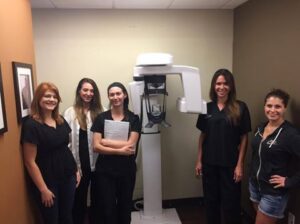 Threats to the inner pulp of your teeth can sometimes be challenging to identify and diagnose, but dental technology has come a long way in the past few years. One of the most exciting pieces of recently developed dental technology that aids endodontic specialists in their work is cone beam computed tomography, or CBCT.
Dental CBCT machines are a special type of x-ray equipment used when regular dental or facial x-rays are not sufficient. An endodontist may use this technology to produce 3-D images of teeth, soft tissues, nerve pathways and bone in a single scan. During a CBCT scan, the the machine rotates around the patient, capturing images using a cone-shaped x-ray beam. The resulting images can capture what is happening in the patient’s mouth, jaw and neck, as well as in their ears, nose and throat.
The biggest advantage of CBCT dental technology is that it allows the practitioner to visualize a patient’s condition as it actually exists in their mouth, because it is able to differentiate between many types of structures and airspaces — including bone, teeth, airway, sinuses, and soft tissue. This allows for a more accurate diagnosis and treatment planning process. CBCT can also be used after treatment to ensure that a root canal or other procedure has adequately addressed all problems that existed prior to the intervention.
Patients need to do very little to prepare for a CBCT scan, other than to wear loose clothing and leave all jewelry at home. CBCT scans are low-dose x-ray examinations compared to a standard medical CT scan.
“We’re thrilled that we can provide CBCT scans for our patients to deliver comprehensive endodontic treatment. This is a piece of dental technology that allows us to provide better care to everyone,” says Dr. Jacqueline S. Allen, who practices with the Phoenix Endodontic Group.
by Dr. Jacqueline S. Allen | Jul 10, 2017 | Blog, Dentistry, Endodontics, Endodontist
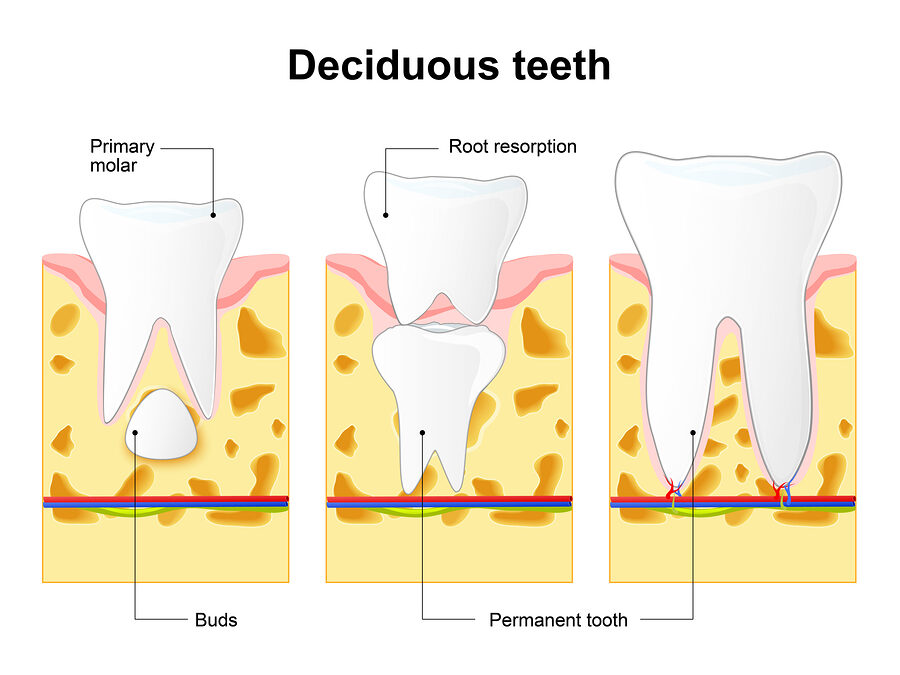
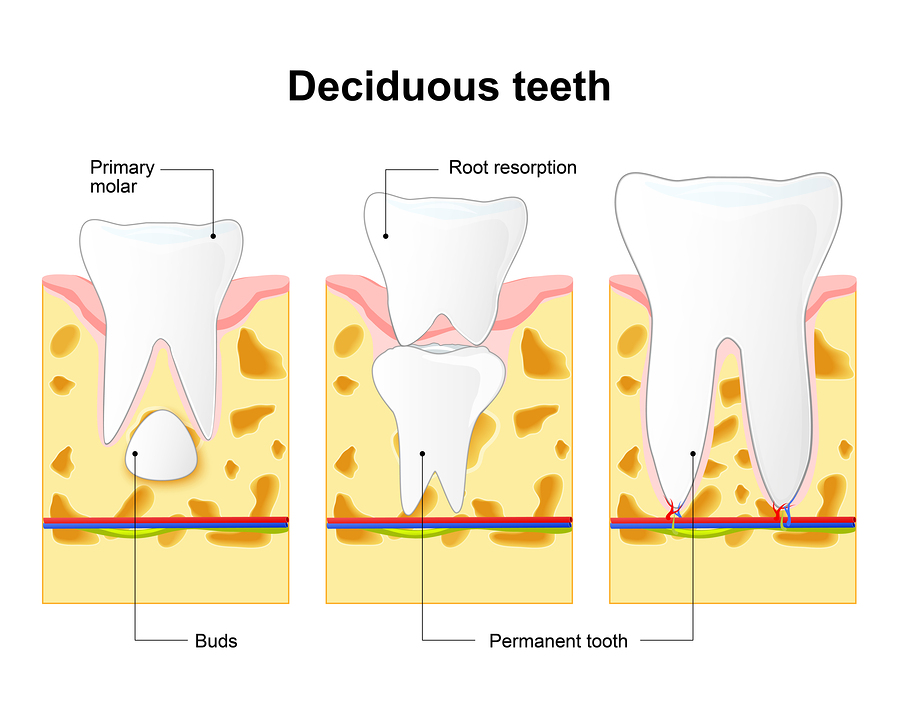 The human body is an amazing organism. It experiences a variety of physical phenomena throughout one’s lifespan in order to keep us on a proper developmental pathway. One phenomenon that is completely normal in childhood is root resorption in the primary teeth. Our “baby teeth” lose their roots, which is why they eventually fall out to make room for our adult teeth.
However, once we have all of our adult teeth, root resorption becomes an unexpected and abnormal process. In some cases of dental resorption a patient can experience pain, numbness, and discomfort, in addition to changes in the shape and size of the teeth; however, often the symptoms can be far more subtle.
Here’s a quick list of things to know about root resorption so that you and your Phoenix endodontist can ensure your natural teeth remain healthy and functional.
How to avoid root resorption problems
- Understand how root resorption can happen. Some causes of dental resorption include excessive orthodontic force being used on teeth, trauma to a tooth that damages the periodontal ligament, and conditions such as bruxism (grinding one’s teeth).
- Understand how root resorption is diagnosed. If root resorption is suspected, your Phoenix endodontist or another dental specialist can use radiographs, photos, x-rays, and diagnostic models to determine how far the resorption has progressed and how severely your natural tooth has been impacted.
- Understand how root resorption is treated. If the resorption activity is primarily occurring on the exterior of the tooth, single-tooth orthodontic or periodontal treatments may help. However, more advanced cases that involve the tooth pulp often require your Phoenix endodontist to perform a root canal to try to save the natural tooth.
“Root resorption allows our baby teeth to make way for our adult teeth, but after that, it is considered abnormal,” says Dr. Allen, who practices with the Phoenix Endodontic Group. “If you suspect you have this condition, make an appointment with your Phoenix endodontist as soon as possible.”
