by Dr. Jacqueline S. Allen | Apr 6, 2026 | Dental Technology, GentalWave
If you’ve been told you need a root canal, your first instinct may be dread. Root canals have a long-standing reputation for being painful and unpleasant — but the reality is that modern endodontic care has come a long way. At Phoenix Endodontic Group, we use the GentleWave Procedure, one of the most advanced root canal technologies available today, to make treatment faster, more comfortable, and more effective than ever before.
But what exactly is GentleWave, and how does it compare to a traditional root canal? Here’s everything you need to know.
What Is a Root Canal — and Why Is It Needed?
Inside every tooth is a soft layer of tissue called the pulp, which contains nerves and blood vessels. When the pulp becomes infected or inflamed — due to deep decay, a crack, or injury — it needs to be removed to save the tooth.
A root canal is the procedure used to clean out that infected pulp, disinfect the inner canals of the tooth, and seal it to prevent reinfection. Without treatment, the infection can spread, cause an abscess, and ultimately result in tooth loss.
You can learn more on our Root Canal Therapy page.
How Does a Traditional Root Canal Work?
In a conventional root canal, the endodontist manually cleans the canals using small hand files and irrigating solutions. While this approach has successfully treated millions of patients, it does have limitations:
- Complex anatomy is harder to clean. Tooth roots branch into intricate micro-canals that hand files simply can’t reach.
- Multiple appointments may be needed. Because cleaning is more labor-intensive, traditional root canals sometimes require two visits.
- More tooth structure may be removed. Traditional filing techniques require more drilling, which can weaken the tooth over time.
- Some bacteria can remain. Microscopic spaces can harbor bacteria that lead to reinfection.
What Is the GentleWave Procedure?
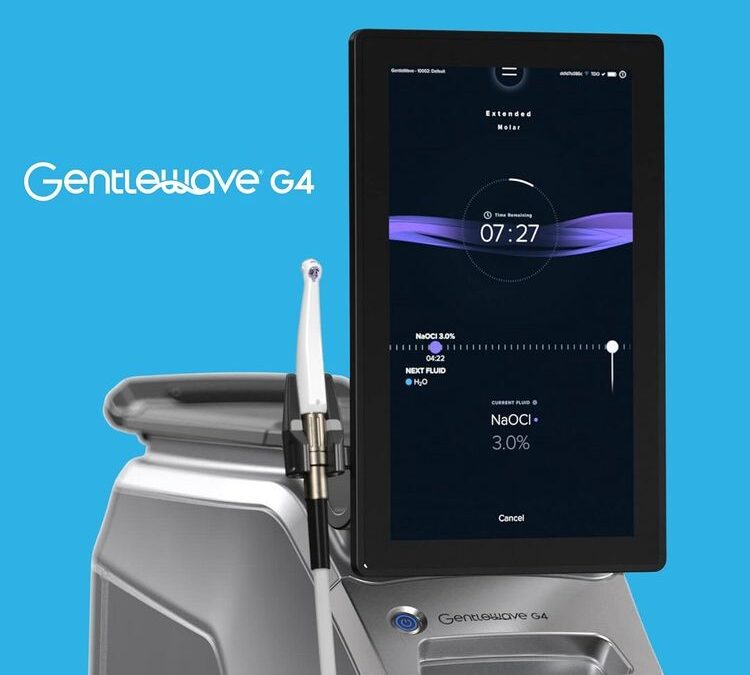
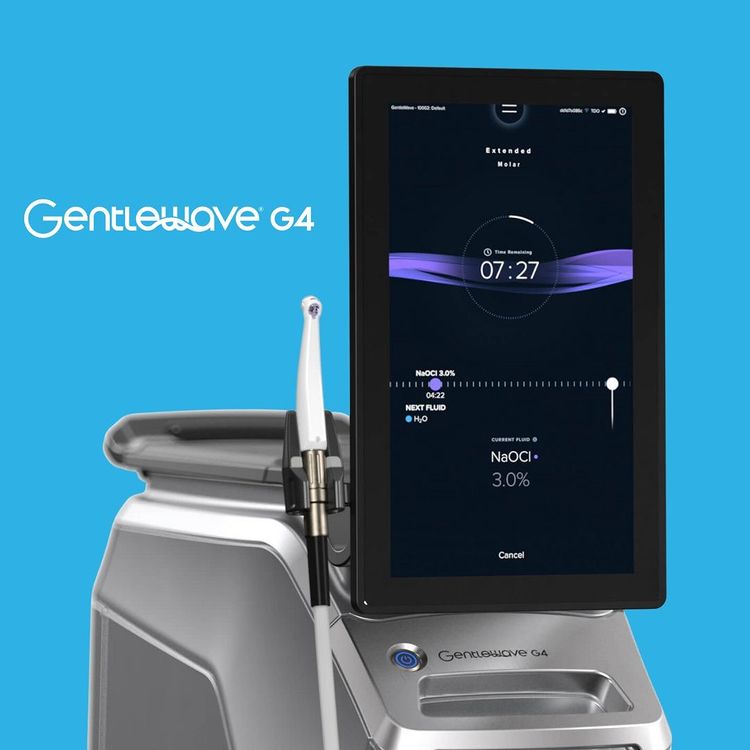
GentleWave is a state-of-the-art root canal system that uses a powerful combination of fluid dynamics and acoustic energy to clean the entire root canal system — including the microscopic spaces that traditional instruments can’t reach.
A slim GentleWave instrument is placed in the tooth’s opening and specially formulated irrigating fluids are delivered in a controlled flow, creating tiny imploding bubbles. This process shakes loose debris, dissolves bacteria, and flushes biofilm from even the deepest, most complex parts of the root system — resulting in a cleaner canal with less mechanical disruption to the tooth itself.
Learn more on our GentleWave page.
GentleWave vs. Traditional Root Canal: Key Differences
Cleaning Effectiveness
- Traditional: May leave bacteria in hard-to-reach micro-canals.
- GentleWave: Cleans more than 98% of organic material, including spaces instruments can’t physically enter.
Invasiveness
- Traditional: Requires more filing and drilling to access and clean the canals.
- GentleWave: Minimally invasive — less drilling means more of your natural tooth structure is preserved.
Number of Appointments
- Traditional: Often requires two or more visits.
- GentleWave: Many patients complete treatment in a single session.
Post-Treatment Comfort
- Traditional: Some discomfort and soreness for several days after treatment is common.
- GentleWave: More than 96% of patients report no pain 48 hours after their procedure.
Best For
- Traditional: Straightforward cases with simpler root anatomy.
- GentleWave: All cases — especially teeth with multiple canals, complex root systems, or previous treatment failures.
Who Is a Good Candidate for GentleWave?
Our endodontists recommend the GentleWave Procedure whenever possible. It is particularly beneficial for:
- Teeth with complex or curved root canal systems
- Patients who want to complete treatment in fewer visits
- Patients with dental anxiety who want a gentler experience
- Cases where a previous root canal has failed and retreatment is needed
- Anyone who wants the most thorough cleaning possible to minimize reinfection risk
The best way to find out if GentleWave is right for you is to schedule a consultation with one of our endodontists, Dr. Jacqueline S. Allen or Dr. James F. Wolcott.
Why Phoenix Endodontic Group?
Phoenix Endodontic Group has been serving the Valley for over 25 years and has treated more than 75,000 patients. Our team is equipped with the latest endodontic technology — including GentleWave, surgical microscopes, and 3D cone beam CT imaging — to ensure every patient receives the most precise, effective care available.
We also offer IV sedation for patients with dental anxiety, and same-day emergency appointments for urgent situations.
Explore our full range of services at phoenixendodontist.com or meet our providers to learn about the expertise behind your care.
Ready for a Gentler Root Canal Experience?
If you’ve been told you need a root canal — or you’re experiencing tooth pain and want answers — the team at Phoenix Endodontic Group is here to help. Call us today at (602) 242-4745 or contact us online to schedule your appointment. Same-day emergency appointments are available.
by Dr. Jacqueline S. Allen | Mar 4, 2026 | Blog, Pain, Root Canal
When something feels off with a tooth, it can be tempting to wait and see if it goes away on its own. Sometimes it does. But when the problem is inside the tooth — involving the pulp, nerves, or roots — waiting rarely helps and often makes things significantly worse.
Endodontists are dental specialists who focus exclusively on diagnosing and treating conditions that affect the interior of your teeth. At Phoenix Endodontic Group, our team sees patients every day who wish they had come in sooner. Here are five signs that it may be time to schedule an evaluation — and why acting quickly can mean the difference between saving and losing your tooth.
1. Persistent or Severe Tooth Pain
Not all tooth pain requires a root canal, but pain that is intense, throbbing, or has been lingering for more than a few days is a red flag. Pay particular attention to pain that:
- Worsens when you bite down or apply pressure
- Radiates into your jaw, ear, or temple
- Wakes you up at night
- Doesn’t respond to over-the-counter pain relievers
This type of pain often signals inflammation or infection deep within the tooth pulp — the soft tissue that contains nerves and blood vessels. The longer an infection goes untreated, the more it can spread to surrounding bone and tissue.
2. Prolonged Sensitivity to Hot or Cold
It’s normal for teeth to feel a brief flash of sensitivity when you eat something very hot or cold. What’s not normal is when that sensitivity lingers for 30 seconds or more after the food or drink is gone.
Prolonged thermal sensitivity is one of the hallmark signs of pulpitis — inflammation of the tooth’s inner pulp. In its early stages, pulpitis may be reversible with the right treatment. Left untreated, it becomes irreversible and the nerve eventually dies, which can lead to abscess and serious infection.
If you find yourself avoiding hot coffee or cold water because of one particular tooth, that tooth is telling you something important.
3. Darkening or Discoloration of a Tooth
A tooth that is visibly darker than the teeth around it — particularly one that has gradually turned gray, brown, or black — may be a sign that the pulp tissue inside has died or is dying. This can happen as a result of:
- Dental trauma (a blow to the mouth, even years ago)
- Untreated decay that has reached the inner pulp
- A previous dental procedure that has failed over time
Tooth discoloration doesn’t always come with pain, which is why many people delay seeking care. However, a non-vital (dead) tooth can still harbor infection and require treatment to prevent complications.
4. Swelling, Tenderness, or a Pimple on Your Gums
Swelling in the gums or jaw near a specific tooth is a serious warning sign. So is a small pimple-like bump on the gum tissue — this is called a dental fistula (or sinus tract) and it’s essentially your body’s way of trying to drain an abscess.
These symptoms indicate an active infection. Dental abscesses do not heal on their own. Without treatment, the infection can spread to the jaw, neck, or even the bloodstream — a condition that can become life-threatening.
If you notice any swelling or a persistent bump on your gums, seek care as soon as possible. Phoenix Endodontic Group offers same-day emergency appointments for situations like this.
5. A Chipped, Cracked, or Traumatized Tooth
Physical trauma to a tooth — whether from a sports injury, a fall, biting down on something hard, or an old accident — can damage the inner structures even when the exterior looks mostly intact. Cracks that extend into the pulp can allow bacteria to enter and cause infection over time.
Cracked tooth syndrome can be particularly tricky because the pain often comes and goes. You may only feel it when biting in a specific direction, or notice it intermittently for weeks or months. By the time it becomes constant, the damage is usually more advanced.
Our endodontists use advanced 3D cone beam CT imaging and surgical microscopes to detect cracks and damage that standard X-rays might miss, allowing for earlier and more precise treatment.
Why Waiting Makes It Worse
Dental infections and nerve damage don’t self-resolve. Here’s what can happen when treatment is delayed:
- The infection spreads. What begins as a localized issue can expand to the jawbone, surrounding teeth, and soft tissue.
- The tooth becomes unsavable. Early-stage problems are often treatable with a straightforward root canal. Advanced infections may result in extraction.
- Treatment becomes more complex and costly. A simple root canal is significantly less invasive — and less expensive — than an extraction followed by an implant.
- Pain escalates. Hoping tooth pain will “go away” almost never works when the nerve is involved. It tends to worsen.
When to Call Phoenix Endodontic Group
If you are experiencing any of the symptoms described above, we encourage you to call our office promptly. You don’t need to wait until things get unbearable. In fact, the earlier you come in, the more options we have to help you keep your natural tooth.
Our endodontists, Dr. Jacqueline S. Allen and Dr. James F. Wolcott, have performed thousands of root canal treatments and specialize in making the experience as comfortable as possible. We also offer IV sedation for patients with dental anxiety, and same-day emergency appointments when you can’t wait.
Call us today at (602) 242-4745 or visit phoenixendodontist.com to schedule your appointment. Your natural teeth are worth saving — and we’re here to help.

by Dr. Jacqueline S. Allen | Feb 5, 2026 | Dental Emergency, Dental Trauma
Dental injuries can happen in an instant—during a fall, a sports activity, biting something too hard, or even an unexpected accident. When a tooth chips, cracks, or is knocked out completely, knowing what to do in the first moments can make the difference between saving the tooth and losing it permanently. At Phoenix Endodontic Group, we specialize in treating dental trauma and helping patients preserve their natural teeth whenever possible. This guide explains common types of dental injuries and what steps to take right away.
Chipped Tooth: What You Should Do Immediately
A chipped tooth is one of the most common dental injuries. While minor chips may not always feel urgent, they can expose the inner layers of the tooth, making it vulnerable to sensitivity or deeper problems later.
First Steps for a Chipped Tooth
Rinse your mouth gently with warm water to remove debris. If the chip is small, keep the area clean and avoid chewing on that side. Even minor chips should be evaluated by a dental professional because there may be hidden cracks or trauma to the tooth structure. Phoenix Endodontic Group can assess whether the pulp has been affected and determine if any treatment is needed to protect the tooth long term.
Cracked Tooth: A More Serious Kind of Injury
A crack can range from a superficial line in the enamel to a fracture that extends deep into the root. Cracked teeth often cause pain when biting, chewing, or exposing them to temperature changes.
How To Respond to a Cracked Tooth
If you suspect a crack, avoid chewing on the affected tooth. Rinse with warm water and apply a cold compress to control swelling. Even if the tooth appears intact, internal damage can progress quickly. Endodontists are uniquely trained to evaluate cracked teeth and determine the best way to save them. In many cases, root canal therapy may be needed if the pulp is exposed or inflamed.
Phoenix Endodontic Group uses advanced imaging and diagnostic tools to identify cracks that may not be visible to the naked eye. Early evaluation gives the tooth the best chance for successful treatment.
Knocked-Out Tooth: Why Time Matters Most
A knocked-out (avulsed) tooth is a true dental emergency. Acting quickly—ideally within 30 minutes—greatly improves the chances of saving the tooth.
What To Do If a Tooth Is Knocked Out
Pick up the tooth by the crown (the chewing surface), never the root. Gently rinse it if dirty, but do not scrub or remove tissue fragments. If possible, place the tooth back into its socket and hold it there with gentle pressure. If reinsertion isn’t possible, keep the tooth moist in milk or in the mouth next to your cheek. Do not store it in water, as this can damage the root surface.
Call Phoenix Endodontic Group immediately for emergency care. Endodontists are experts in replanting avulsed teeth and providing the root canal therapy often needed after reinsertion. Fast action dramatically increases the likelihood of long-term survival.
When You Should Seek Endodontic Care After Trauma
Not every dental injury causes immediate pain, but that doesn’t mean the tooth is healthy. Damage to the pulp can develop days, weeks, or even months after the injury.
Seek evaluation by Phoenix Endodontic Group if you experience any of the following after trauma:
• Tooth discoloration (gray or darkened appearance)
• Sensitivity that persists
• Pain when chewing
• Swelling around the tooth or gums
• A pimple-like bump on the gums
• Previous trauma that was never evaluated
Endodontists specialize in diagnosing internal tooth damage and determining whether the nerve is injured or infected. Early treatment can prevent more serious problems and help preserve the tooth.
How Phoenix Endodontic Group Helps Save Injured Teeth
Our team provides expert care for dental trauma using advanced technology and evidence-based techniques. From repairing cracked teeth to replanting knocked-out teeth, we focus on preserving your natural tooth whenever possible. With state-of-the-art tools, including high-resolution imaging and advanced cleaning techniques, we can treat even complex injuries with precision.
If you’ve experienced any type of dental trauma, don’t wait. Contact Phoenix Endodontic Group for prompt evaluation and treatment to give your tooth the best chance of recovery.
by Dr. Jacqueline S. Allen | Jan 15, 2026 | Apicoectomy, Blog, Root Canal

At Phoenix Endodontic Group, we specialize in advanced endodontic care designed to diagnose, treat, and preserve your natural teeth whenever possible. With decades of combined experience serving patients throughout the Valley, our team combines compassionate care with cutting-edge technology to deliver excellent outcomes. Whether you have been referred by your dentist or are experiencing tooth pain or injury, we offer a comprehensive range of services focused on comfort, precision, and long-term oral health.
Root Canal Therapy – Saving Natural Teeth
Root canal therapy is the most common service provided at Phoenix Endodontic Group and one of the most effective ways to relieve tooth pain and prevent extraction. This treatment removes infected or inflamed tissue from inside the tooth, thoroughly cleans the root canal system, and seals it to prevent reinfection. Our endodontists perform root canal procedures using advanced techniques and technology to improve accuracy, reduce discomfort, and support faster healing while preserving as much natural tooth structure as possible.
Root Canal Retreatment
In some cases, a tooth that has previously undergone root canal therapy may develop new symptoms or fail to heal completely. Root canal retreatment allows our specialists to reopen the tooth, remove the original filling material, address lingering infection, and reseal the canals. Using advanced diagnostic tools, including 3D imaging when necessary, we can identify hidden canals, fractures, or other issues that may have contributed to treatment failure. Retreatment often provides a second opportunity to save a natural tooth.
Apicoectomy
When infection persists at the tip of the root despite root canal therapy, an apicoectomy may be recommended. This minor surgical procedure involves removing the infected tissue and the very end of the root, then sealing the root tip to prevent further infection. Apicoectomies are typically performed when conventional treatment alone is not sufficient and are often successful in preserving teeth that might otherwise require extraction.
Emergency Endodontic Care
Dental emergencies can occur suddenly and often involve significant pain or swelling. Phoenix Endodontic Group offers same-day emergency care for patients experiencing severe tooth pain, infection, or dental trauma. Prompt treatment is critical in emergency situations, as early intervention can prevent complications and increase the likelihood of saving the affected tooth. Our team evaluates each case quickly and develops an appropriate treatment plan to address the issue efficiently.
Treatment for Cracked, Broken, or Traumatized Teeth
Dental injuries such as cracked, chipped, or displaced teeth often require specialized endodontic care. Trauma can damage the inner pulp of a tooth even if the outer structure appears intact. Our specialists are trained to diagnose and treat traumatic dental injuries, including teeth that have been knocked out or fractured. Timely treatment can stabilize the tooth, relieve pain, and significantly improve long-term outcomes.
Advanced Technology and the GentleWave Procedure
Phoenix Endodontic Group uses modern technology to enhance precision and patient comfort. This includes surgical microscopes, advanced irrigation techniques, and the GentleWave procedure, which allows for more thorough cleaning of complex root canal systems. We also utilize 3D cone-beam imaging when needed to visualize anatomy that traditional X-rays may miss. These technologies help improve treatment success and reduce the likelihood of future complications.
IV Sedation for Patient Comfort
For patients with dental anxiety, strong gag reflexes, or complex treatment needs, IV sedation is available. IV sedation helps patients remain deeply relaxed and comfortable throughout their procedure and is monitored by a licensed anesthesiologist. This option allows patients to receive necessary care with minimal stress and discomfort.
Dental Implants When Tooth Preservation Is Not Possible
Although preserving natural teeth is always our priority, some teeth cannot be saved due to severe damage or infection. In these cases, Phoenix Endodontic Group offers dental implant services as a long-term tooth replacement solution. Dental implants restore function, appearance, and stability while supporting overall oral health.
Comprehensive, Patient-Focused Care
Across all services, Phoenix Endodontic Group is committed to providing high-quality, patient-centered care. We take time to explain treatment options, answer questions, and ensure each patient feels informed and comfortable. Our goal is to deliver exceptional outcomes while making every visit as stress-free as possible.
Trusted Endodontic Care in the Phoenix Area
Phoenix Endodontic Group has earned a reputation for excellence by focusing on advanced care, compassionate service, and proven results. Whether you need routine root canal therapy, emergency treatment, or specialized surgical care, our comprehensive services are designed to protect your oral health and preserve your smile.
If you are experiencing tooth pain or have been referred for specialized care, Phoenix Endodontic Group is here to help.

by Dr. Jacqueline S. Allen | Dec 3, 2025 | Cone Beam Computed Tomography

At Phoenix Endodontic Group, we believe that preserving your natural teeth and ensuring your comfort should go hand in hand. That’s why we’ve integrated advanced diagnostic tools—most notably cone-beam computed tomography (CBCT)—into our daily care. This powerful 3-D imaging technology allows our specialists to visualize the smallest details of your tooth structure and surrounding anatomy, leading to more accurate diagnoses, safer procedures, and better long-term outcomes.
Why 3-D Imaging Matters in Endodontic Care
Traditional 2-D dental x-rays can sometimes miss complex or hidden features within a tooth. CBCT, however, provides a comprehensive 3-D view of your tooth, its roots, and nearby bone structures, offering unparalleled diagnostic insight.
With this technology, our endodontists can:
-
Identify root canal anatomy, curvature, and tiny accessory canals.
-
Detect hidden infections, cracks, or resorption that might not appear on traditional films.
-
Plan treatment with greater accuracy and confidence.
-
Evaluate healing progress after your procedure.
This level of precision ensures your treatment is targeted, efficient, and minimally invasive—resulting in less discomfort and faster recovery.
A Better Experience for Every Patient
When CBCT imaging is part of your root canal treatment, you benefit from:
-
Improved comfort — Your doctor knows exactly what to expect before treatment begins.
-
Reduced risk of missed anatomy — Every canal is located and cleaned thoroughly.
-
Personalized treatment planning — Your 3-D images are reviewed and discussed so you can clearly understand your care plan.
-
Greater success in preserving your natural tooth — The ultimate goal of endodontic treatment.
Our state-of-the-art J. Morita CBCT unit gives our doctors the confidence to treat even the most complex root systems with precision and care.
When CBCT Makes the Biggest Difference
3-D imaging is especially valuable for:
-
Retreatment cases – when a previous root canal has failed or new symptoms appear.
-
Dental trauma – to determine the extent of cracks, fractures, or internal resorption.
-
Surgical endodontics (apicoectomy) – where pinpoint accuracy is critical.
-
Complex molars or curved roots – ensuring all canals are located and properly treated.
In these scenarios, CBCT can be the difference between uncertainty and complete, confident care.
Safe, Efficient, and Focused on You
CBCT scans are safe and quick, delivering focused radiation that’s comparable to standard dental x-rays but far lower than medical CT scans. Not every patient requires 3-D imaging—but when it’s indicated, it provides invaluable information that helps protect your tooth and overall oral health.
Our Commitment to Advanced, Compassionate Care
For over two decades, Phoenix Endodontic Group has been dedicated to combining expert clinical skill with cutting-edge technology. By embracing CBCT imaging, we continue to elevate patient care—offering treatments that are more comfortable, precise, and effective than ever before.
If you’ve been referred for a root canal or are experiencing tooth pain, contact our team to learn how advanced 3-D imaging can help us diagnose and treat your tooth with accuracy and care.
Schedule your consultation today with Phoenix Endodontic Group. Experience how advanced imaging and specialized expertise can make root canal treatment more comfortable, efficient, and successful.
