
by Dr. Jacqueline S. Allen | Feb 15, 2018 | Blog, Business, Endodontist, Root Canal
 When you are trying to invest in something important – a car, say – it’s not enough to think about any type of motorized vehicle with four wheels that will get you from Point A to Point B. To get the best value for your money, you’ll have to think about how you live your life, what monthly payment you can afford, the size of your garage, and many other factors.
That same sort of individualized thinking comes into play when you have an infected or injured tooth and need to see a dental professional to fix it. You most likely will need an endodontist, a dentist who is a specialist in saving natural teeth. But there’s more to finding a good endodontist than just looking for the word in a practice’s name. Here are just a few qualities you’ll want to look for as you “comparison shop” for endodontists, to find the best specialist to work on your mouth.
Great Qualities Your Endodontist Should Have
- Specialized training. Endodontists receive two to three additional years of schooling after dental school, but because the field changes so rapidly, a commitment to continuing education is a must. Membership in an organization such as the American Association of Endodontists can indicate a practitioner is invested in remaining up to date on their education.
- A commitment to your comfort. Endodontists are experts at managing pain and discomfort, even for patients who have had challenges in this area in the past. A good endodontist will focus on your comfort level and seek to maintain or improve it throughout all procedures that are undertaken.
- Skill with current technologies. Technological breakthroughs have revolutionized root canal treatment in the past 30 years. An endodontist’s use of these tools can make your recovery from treatment quicker and help you experience less discomfort.
- A high experience level with endodontic procedures. General dentists perform, on average, two root canals per week; an endodontist may perform as many as 25. This translates into greater familiarity with different challenges and how to solve them.
- A wide network of professional colleagues. Collaborating with a network of general dentists, fellow endodontists and other dental specialists means your endodontist can accept and make referrals with ease if your case calls for one.
“As endodontists, we are committed to pursuing the education, collaboration and professional excellence it takes to properly care for our clients,” says Dr. Jacqueline S. Allen, a partner with the Phoenix Endodontic Group.

by Dr. Jacqueline S. Allen | Dec 13, 2017 | Blog, Cracked Teeth, Endodontist
While many of us appreciate the change in schedule that the winter holidays usher in, if we experience a dental emergency during a holiday, it can be difficult to determine what conditions require immediate care by a dentist and which don’t. Here are a few guidelines to help you determine whether your dental pains are serious or not, and what to do next.
 Red Alert: Don’t Ignore A Dental Emergency
If you experience a dental injury that is the result of a blow to the head or face, involves a laceration, serious cut, a jaw fracture or dislocation, or is caused by an infection in your mouth so severe it’s impacting your ability to breathe or swallow, you’ll want to head directly for the ER. All of these conditions are potentially life-threatening and need immediate medical attention.
Yellow Alert: Urgent But Not Emergency Conditions
There is another category of dental crisis that normally necessitates a next-day trip to the dentist. Some of these conditions include:
- Cracked or broken teeth
- A knocked-out tooth that was not the result of face/head trauma
- A dental abscess that’s painful but not interfering with breathing or swallowing
If your dentist or endodontist is not available due to a holiday closure, call the office’s emergency number. The practice may have a designated emergency provider, or your provider may be able to call in an antibiotic to eliminate infection.
Green Alert: Situations Where Home Care Can Work
Although it may make for a challenging day or two, some dental conditions can be managed from home until the dentist is open for business after the holidays.
- If you lose a filling, your pharmacy may carry temporary dental filling material to protect your tooth.
- A mild toothache may respond to over-the-counter pain relievers until the dentist visit can be scheduled.
- Some minor dental discomfort can be relieved by chewing on the side opposite the painful tooth until your appointment.
- Keep the affected area of your mouth clean by swishing with salt water.
“Our practice makes every effort to see clients the same day that they call,” says Dr. Jacqueline S. Allen, a partner at the Phoenix Endodontic Group. “We see patients on an emergency basis 24 hours a day, seven days a week. However, when there is a delay before a client can see the dentist, we can help them determine the safest and most comfortable way to make it through a holiday.”

by Dr. Jacqueline S. Allen | Nov 13, 2017 | Blog, Endodontics, Endodontist, General Information, Root Canal
 Like most health-enhancing procedures, the technologies and techniques used to provide root canals have been steadily advancing, especially over the past few decades. Today’s root canal procedure is considerably easier on patients than it was in the 1980s, or even the 1990s.
Something that may surprise you, however, is that root canals have been around for well over a century. Here’s a brief list of historical milestones related to root canal procedures, to foster appreciation for how they have developed.
Important Dates In Root Canal History
- 1728 – Pierre Fauchard, a French physician regarded as the father of modern dentistry, authors the book “Le chirurgien dentiste,” which describes the existence of dental pulp.
- 1838 – American Edwin Maynard creates the first root canal instrument, which he fashions from a watch spring.
- 1847 – Gutta-percha is introduced as a material for filling dental canals.
- 1890s – Crowns are becoming increasingly popular as a dental restoration. Many require canal posts, which increases interest in endodontic treatments such as root canals.
- 1900 – The emerging imaging technology of X-rays is identified as an important tool for diagnosing tooth root problems.
- 1943 – The American Association of Endodontics is established to facilitate professional practice in this specialty.
- 1950s – After a half-century of controversy, research establishes that natural teeth needing root canals do not cause systemic health problems, leading to a renewed interest in endodontics.
- 1990s to the present – Endodontic root canal treatments receive an upgrade due to improved imaging techniques, the advent of rotary nickel-titanium files to clean canals, and use of new irrigating solutions.
“Root canals have never been a static procedure, with only ‘one right way’ to preserve a challenged natural tooth,” says Dr. Allen of the Phoenix Endodontic Group. “Endodontists in all eras have striven to improve the experience for patients and create successful outcomes.”

by Dr. Jacqueline S. Allen | Sep 12, 2017 | Blog, Cracked Teeth, Endodontist
 When it comes to your dental health, it’s true that what you don’t know about a condition can hurt you far more than what you do know. Cracked teeth are an especially good example of this phenomenon. Depending on the type and severity of the crack, the impacted tooth may display clearly distressing, perplexing signs, or even no symptoms at all.
Your local endodontist is a specialist in diagnosing and treating cracked teeth. Here is a short list of “must-know” bits of information about cracked teeth.
Cracked Teeth: What Your Endodontist Wants You To Know
There can be many reasons a tooth becomes cracked. If you think that you can’t be experiencing a cracked tooth because you don’t remember anything that could have cracked it, understand that the reasons teeth become cracked vary. Cracked teeth can result from chewing on nuts, hard candy or ice, a blow to the mouth; chronically grinding one’s teeth, and previously losing an extensive amount of natural tooth structure, to exposure of the tooth to temperature extremes.
Teeth can become cracked in a variety of ways. There are craze lines, which only impact the cosmetic look of your enamel; a fractured cusp, which impacts the biting surface of your tooth; a cracked tooth, which is a fracture of the tooth and may or may not have extended to the root yet; and a vertical root fracture, which starts at the root and extends upward to the biting surface of the tooth.
Early diagnosis of cracked teeth is critical. If you believe you might have a cracked tooth, don’t put off a trip to your endodontist for an evaluation. Unlike other types of human bones, broken teeth do not heal. A small crack will get worse, and once the crack reaches the pulp of the tooth, the survival of the natural tooth itself will be in peril. Prompt diagnosis of the condition will give your endodontist treatment options such as fillings or crowns to protect the vulnerable tooth structure, or root canal treatment if the crack is impacting the pulp of the tooth.
“The whole idea of having a cracked tooth can be upsetting, but endodontists have many tools for resolving fractures to your natural teeth that preserve them and keep them healthy,” says Dr. Allen, who practices with the Phoenix Endodontic Group.

by Dr. Jacqueline S. Allen | Aug 24, 2017 | Blog, Endodontics, Endodontist, General Information, Phoenix Endodontic Group
 In 2001, Dr. Jacqueline S. Allen founded Phoenix Endodontic Group. Our firm has grown tremendously over the past decade and a half.
Over the last 16 years we have seen a lot of changes in the dental profession, technology and patient expectations. While flexibility is necessary when handling endodontic cases in today’s environment, it is equally important to stay true to the core values. Our core values are what brought Phoenix Endodontic Group so much success over the years.
Here are 3 important things to know about Phoenix Endodontic Group:
- Patient Focused: We recognize that the needs, care and treatment of our patients are our number one priority. From her first day in private practice, Dr. Allen’s philosophy is to “treat patients the way I want to be treated.” This idea is the cornerstone of our operation at Phoenix Endodontic Group
- State of the Art: At Phoenix Endodontic Group, we constantly invest in new technologies to keep ourselves on the cutting edge of endodontic therapy. Additionally, Dr. Allen spends a considerable amount of time continuing her education in the endodontic field. She believe strongly in learning and understanding the latest theories and techniques in the field of endodontics.
- Best in Class Care: Our team is focused on making sure you receive the best care. From appointment scheduling, insurance billing and post treatment care we are there to serve our patients and referring offices. Our goal is to make sure that every patient is “delighted” by the service and care provided by Phoenix Endodontic Group.
At Phoenix Endodontic Group, we feel that doing all of the “little things” correctly and attention to detail are two things that separate us from other endodontic dental offices. We are proud of our successes and our team’s dedication to providing top care for our patients. These first 16 years have gone by quickly and we look forward to the next 16 years with the same philosophy and commitment to excellence!

by fisherwebdesign | Aug 10, 2017 | Blog, Cone Beam Computed Tomography, Dental Technology, Endodontics, Endodontist, Phoenix Endodontic Group, Technology
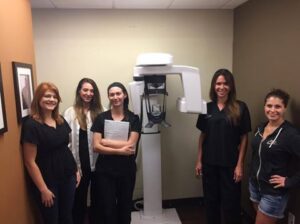 Threats to the inner pulp of your teeth can sometimes be challenging to identify and diagnose, but dental technology has come a long way in the past few years. One of the most exciting pieces of recently developed dental technology that aids endodontic specialists in their work is cone beam computed tomography, or CBCT.
Dental CBCT machines are a special type of x-ray equipment used when regular dental or facial x-rays are not sufficient. An endodontist may use this technology to produce 3-D images of teeth, soft tissues, nerve pathways and bone in a single scan. During a CBCT scan, the the machine rotates around the patient, capturing images using a cone-shaped x-ray beam. The resulting images can capture what is happening in the patient’s mouth, jaw and neck, as well as in their ears, nose and throat.
The biggest advantage of CBCT dental technology is that it allows the practitioner to visualize a patient’s condition as it actually exists in their mouth, because it is able to differentiate between many types of structures and airspaces — including bone, teeth, airway, sinuses, and soft tissue. This allows for a more accurate diagnosis and treatment planning process. CBCT can also be used after treatment to ensure that a root canal or other procedure has adequately addressed all problems that existed prior to the intervention.
Patients need to do very little to prepare for a CBCT scan, other than to wear loose clothing and leave all jewelry at home. CBCT scans are low-dose x-ray examinations compared to a standard medical CT scan.
“We’re thrilled that we can provide CBCT scans for our patients to deliver comprehensive endodontic treatment. This is a piece of dental technology that allows us to provide better care to everyone,” says Dr. Jacqueline S. Allen, who practices with the Phoenix Endodontic Group.
