by Dr. Jacqueline S. Allen | May 2, 2024 | Root Canal, Top

Having a cavity may sound like no big deal; after all, 90 percent of American adults over the age of 20 have had at least one. An untreated cavity, though, invites serious tooth damage. If a cavity is allowed to spread unchecked, your tooth may require a root canal treatment.
To better understand how a cavity can progress into a damaged tooth that needs a root canal, the endodontists at Phoenix Endodontic Group provided answers to some popular questions on the topic.
Answers To Common Questions About Tooth Decay And Root Canals
What is tooth decay?
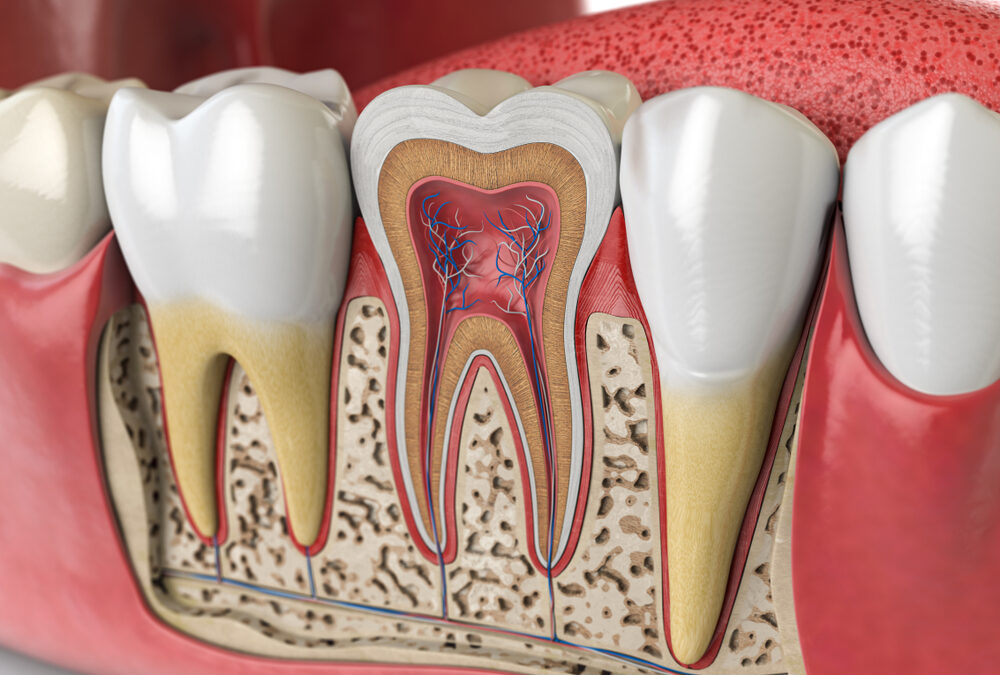
Decay happens when plaque, a thin bacterial film, forms on the surface of the teeth and begins to attack the enamel, which makes up the tooth’s hard, protective outer layer.
How can tooth decay lead to a root canal?
After penetrating tooth enamel, bacteria erode dentin and then infect pulp. The tooth pulp layer contains nerves and blood vessels. At this point you may experience an abscess – a pocket of pus – in the roots of your tooth. When the pulp layer is damaged through infection, a root canal may become necessary to save your tooth.
How do I know if my cavity is bad enough to need a root canal?
You should contact your dentist or endodontist if you experience a severe toothache that gets worse when chewing or biting with the tooth, a darkening of the infected tooth, a boil or pimple on the gum surrounding the tooth, or pain from hot or cold lasting after the source has been removed.
How does a root canal work to repair the damage caused by tooth decay?
Your endodontist will use a set of special files or a technology like the GentleWave Procedure to clean out the infection and shape your tooth roots. Then, they will use a biocompatible material like gutta-percha to fill the roots and replace the tooth pulp. As a last step, to prevent additional infections from entering the tooth, your general dentist will place a crown over the tooth receiving the root canal.
How can I learn more about what my root canal treatment will be like?
Call us. At Phoenix Endodontic Group, we’re always happy to discuss the specifics of your case and answer your questions about what to expect before, during and after your root canal. Our commitment is to deliver your care in a welcoming, comfortable, stress-free environment.
To schedule an appointment with the Phoenix Endodontic Group, call (602) 242-4745.

by Dr. Jacqueline S. Allen | Apr 8, 2024 | Blog, Root Canal
Are you one of those people who feels a little anxious about having to undergo a root canal procedure? We can help. Our practice offers IV sedation as a way to manage the anxiety that comes with having to have a root canal. IV Sedation helps issues with discomfort, or for patients with dental anxiety. It is also useful when we work on numerous teeth or complex tooth roots.
Using IV sedation for root canals allows patients to receive care with relative ease and permits our practitioners to provide care in a relaxed, focused environment.
Here we answer a few common questions relating to IV sedation dentistry.
How is IV sedation different from local anesthesia?
During most root canals, patients receive local anesthesia injected in the gum near the tooth to be worked upon. The patient cannot feel discomfort around this area, but is fully conscious. IV sedation is a method of delivering anesthesia intravenously and relaxes the entire body.
Who delivers IV sedation at your practice during root canals?
Phoenix Endodontic Group contracts with a licensed dental anesthesiologist to provide and monitor IV sedation services.
What might I experience during my IV sedation root canal?
Sedation is delivered to the degree most appropriate for your situation. Most patients experience a light to moderate level of sedation during root canal therapy.
Light IV sedation makes you feel relaxed. Moderate IV sedation may make you feel drowsy; later on, you may not clearly remember your procedure. Heavy IV sedation does not make you unconscious, but most patients fall asleep and remember nothing about their experience.
How do I prepare for an IV sedation root canal?
If you’re having a root canal with IV sedation, our staff will discuss your treatment plan during your initial consultation. Be sure to tell us about medications you are taking (including over-the-counter) or systemic health conditions such as diabetes or high blood pressure.
Are there any after-care instructions specifically for root canal patients who receive IV sedation?
After the procedure, you will need a trusted driver to take you home. You may resume most normal activities 24 hours after your IV sedation root canal.
In addition to its use during root canal therapy, our practice also utilizes IV sedation during the placement of dental implants and in conjunction with emergency dental services for broken or knocked-out teeth.
“At Phoenix Endodontic Group, we use all tools at our disposal to provide quality dental care in a calming, healing environment,” says endodontist Dr. Jacqueline S. Allen. “We’re happy to discuss our protocols for IV sedation dentistry and whether it is the right choice for your root canal.”

by Dr. Jacqueline S. Allen | Feb 6, 2024 | Blog, Endodontist, GentalWave, Root Canal
Like carpenters (or stock brokers), endodontists rely on tools of the trade to do their work. Members of both professions have plenty of tools to help them get the job done. Not all tools are created equal for specific tasks, however. Both a screwdriver and a hammer can be used to pound a nail into a board, but the hammer is the better-suited choice.
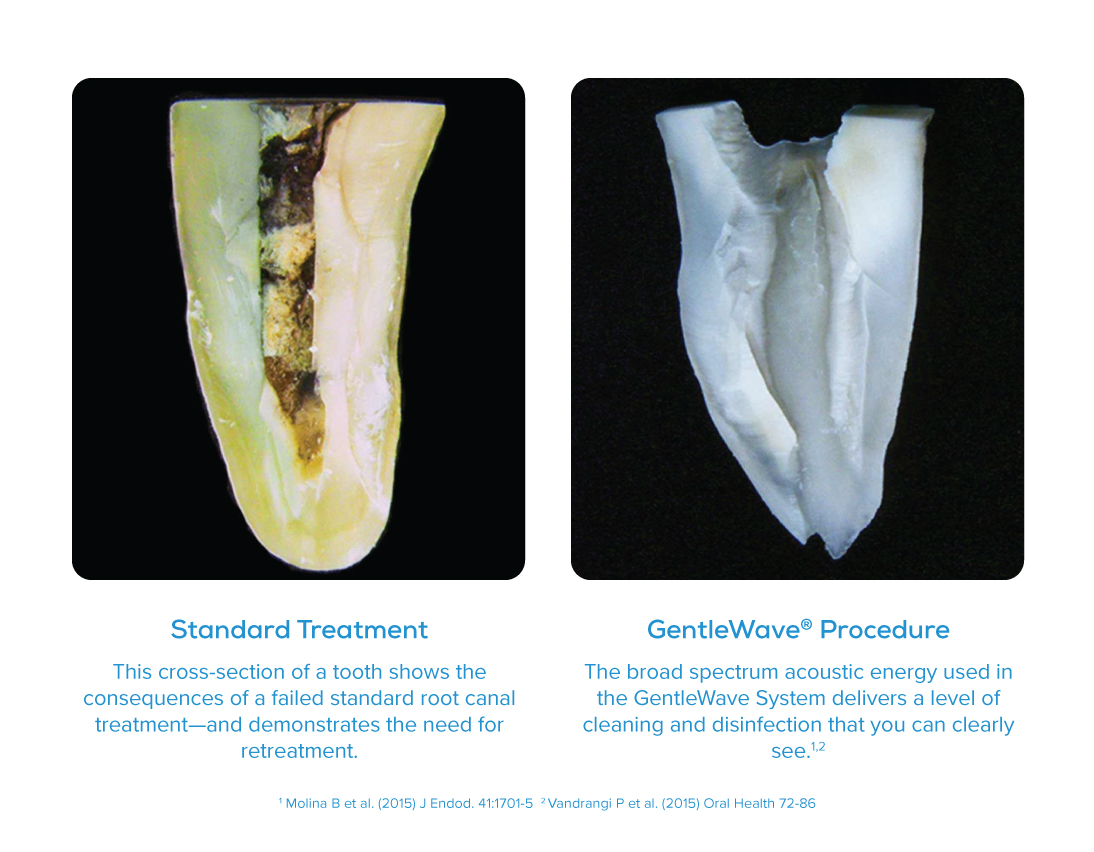
When performing root canals, endodontists now have a tool better than the metal files of old for cleaning tooth roots. Practitioners at Phoenix Endodontic Group now turn to the GentleWave system to perform root canals. Here’s a quick look at its advantages over traditional root canal tools.
Why GentleWave Beats Them All
- The GentleWave System is minimally invasive. It uses multisonic wave pressure to move specially formulated fluid through your tooth roots. No scraping.
- GentleWave can clean your root canals more completely than traditional tools. A cascade of bubbles moves like a whirlwind, descending then rising out of the canal. This flushes bacteria and biofilm from the tooth, no matter how complex the canal’s shape.
- Most patients feel little or no pain during a GentleWave root canal. An ongoing clinical trial by dental technology provider Sonendo, Inc., reported that 99.5 percent of enrolled patients experienced no pain during a GentleWave root canal utilizing CleanFlow Technology.
- Root canal treatment time is reduced when GentleFlow is used. Many root canal patients can now receive their treatment in a single session. (The necessary final crown will be placed in a later visit.)
“The GentleWave System has revolutionized how root canals are performed,” says Dr. Jacqueline S. Allen of Phoenix Endodontic Group. “It provides a faster, more complete cleaning of root canals with less discomfort. Because of this, we are confident GentleWave is the best option for most patients’ root canal therapy.”
by Dr. Jacqueline S. Allen | Jan 3, 2024 | Blog, Root Canal
 Preparation is like power tools – you can get things done without it, but why would you want to? Understanding what may happen when referred to an endodontist for root canal therapy can make the difference between approaching the experience with anxiety or with confidence, maybe even excitement (yes, really!).
Talk with your dental treatment team about the five aspects of root canal therapy listed below before your treatment is scheduled. Do, and you’ll be prepared for most parts of the procedure. You will also be ready to play an active part in your own healing.
5 Things You Should Know Before Root Canal Therapy Begins
1. If root canal therapy is the best choice for you. Your endodontist can provide a clear treatment plan for your failing natural tooth. They will perform a preliminary examination and discuss whether root canal therapy can save your tooth, or whether another option is a better fit.
2. Do you need to take antibiotics before your therapy begins? Many teeth needing root canals are infected from decay or injury. Your practitioner may prescribe oral antibiotics to fight any active infections.
3. Post-procedure instructions from your endodontist. You will go home with a sheet of instructions, including what foods to eat, how to care for your tooth after the root canal, and activities to avoid for the first few days.
4. What to do if you have pain after your root canal therapy. Root canals usually relieve pain rather than causing it. Sharp pain after a root canal may indicate more treatment is needed. Your endodontist will provide a number to call (both during and after working hours) if you experience pain and need to be examined immediately.
5. When to schedule follow-ups with your endodontist and dentist. Your specific damage and treatment may need a follow-up with your endodontist. Otherwise, once the tooth treated with root canal therapy has begun healing, you will visit your general dentist for a crown or other restoration atop your root canal, ensuring years of protection for your natural tooth.
“We equip our patients with the knowledge to feel comfortable and informed before root canal therapy,” says Dr. Jacqueline S. Allen, who practices with the Phoenix Endodontics Group. “Understanding what to expect improves healing and the procedure’s success.”

by Dr. Jacqueline S. Allen | Dec 4, 2023 | Blog, Endodontics, Endodontist, Root Canal
Root canal treatment of a damaged or infected natural tooth can enable it to last a lifetime. However, like most treatments, you as the patient must do your part to ensure your procedure is successful.
Proper root canal treatment aftercare can be divided into things you should do immediately after the procedure, during recovery week, and things you should do over the long run. Let’s take a look at each set of instructions so you’ll be well prepared when you have your root canal treatment.
Aftercare Tips: Immediately After Your Root Canal Treatment
Do not eat for several hours after your root canal. This allows the local anesthesia to wear off – you will avoid biting injuries due to numbness.
Do not smoke after your root canal treatment. Smoking tobacco impedes healing.
Make sure you have antibiotics prescribed by your endodontist. This allows you to continue to fight any infection in your tooth.
Keep the endodontist’s contact information handy in case there is post-procedure pain. You should NOT have excruciating pain after a root canal – if you do, call the office so they can look into what is happening.
Aftercare Tips: The Week After Your Root Canal Treatment
Do not bite down using the tooth that received the root canal. Until you’ve had a permanent restoration (usually a crown) placed, you could lose your temporary filling by putting biting pressure on the tooth.
Stick to soft foods while your mouth is healing. You can choose from delicious options that include scrambled eggs, smoothies, yogurt, pasta, noodle dishes, mashed potatoes, meatloaf, hummus, cooked vegetables, or sorbets.
Ease back into your regular activities. You can go to work in a day or two, and start exercising a few days after that. When in doubt, don’t push things; let your body guide recovery.
Aftercare Tips: When Your Root Canal Treatment Is Finished
Make sure you get the permanent restoration (usually a crown) placed over your root canal. This one step is critical to protecting the root canal and cannot be skipped.
Continue to brush and floss daily. You can care for your tooth that received the root canal as you would any natural tooth after the healing stage is complete.
Visit your general dentist regularly. They will monitor your overall oral health and can refer you to an endodontist if you need another root canal or a root canal retreatment.
“Most of the steps that we ask our patients to take after a root canal treatment are simple, but they should be followed closely,” says Dr. Jacqueline S. Allen, who practices with Phoenix Endodontics Group. “We are happy to discuss how to follow aftercare instructions and why they are important.”

by Dr. Jacqueline S. Allen | Nov 3, 2023 | Blog, Endodontics, Endodontist, Root Canal
When times are tough, folks yearn for the “good old days.” However, most of us wouldn’t really want to travel back in time for complex dental work. For endodontic procedures such as root canal therapy, patient outcomes and happiness have improved immensely, on the heels of improvements in technology and treatment techniques.
Here’s a brief list of just some ways root canal therapy has gotten better over recent generations.
Advancements In Root Canal Therapy
1. Diagnostic imaging, for better treatment. When root canals were first performed, dentists didn’t have even basic imaging technology to guide their work. Today, treatments can be pinpointed with Cone Beam Computed Tomography, allowing endodontists a full 3-D view of your teeth.
2. Local anesthetics allow a comfortable treatment. The earliest root canal treatments happened before the advent of anesthesia. Today’s patients have largely pain-free experiences through local anesthetics. Further, if dental anxiety is an issue, sedation dentistry can provide a gentle solution.
3. Microsurgical tools allow precision canal cleaning and shaping. The first root-canal shaping tool was developed by Edwin Maynard in the mid-1800s, created from a watch spring. Today’s precise tools for cleaning and shaping infected root canals are developed task-specifically, continually refined, and always crafted with your teeth in mind.
4. New cleansing technologies ensure more complete treatment. Top endodontic practices now use the GentleWave Procedure, a root canal treatment that uses fluid dynamics to ensure superior canal cleaning. The result is a faster, less invasive root canal with minimal pain and rapid healing.
5. Restorations ensure root canal treatments remain successful. Early root canal treatments were not followed by the placement of restorations such as a permanent crown. This critical step has hugely enhanced the long-term success rate of root canals, allowing a properly cared for root canal treatment to often last a lifetime.
At Phoenix Endodontic Group, practitioners use all our available advances to provide state-of-the-art treatment.
“When you enter one of our treatment rooms, every aspect of your root canal treatment has been evaluated and selected to provide you with the safest, most comfortable treatment possible. Our goal is preserving your natural teeth, so you can enjoy them for a lifetime,” says Dr. Jacqueline S. Allen, founder of the practice.
